Interview with Joanne Waldstreicher M.D.

Next month, Healthcare executives from across the nations top health systems will convene in Nashville, TN for our Patient Experience Transformation Assembly.  In anticipation, we had a chance to sit down with our Keynote Speaker, Joanne Waldstreicher. Joanne is the Chief Medical Officer at Johnson & Johnson. 

Joanne shared her insights from her distinguished career in healthcare, the biggest challenges facing healthcare executives in 2019, the future of medicine and prioritizing patient care.  Here is the full interview!


You created the Office of the Chief Medical Officer (the OCMO) at Johnson & Johnson as a global and independent group responsible for guiding medical safety, pipeline development, and bioethical decision-making across the company’s pharmaceutical, medical device, and consumer products. How does the OCMO keep the needs of patients and consumers at the center of its efforts while emphasizing transparency across the company’s pharmaceutical, medical device, and consumer products sectors?

We created the OCMO to ensure that safety, our most important priority, is managed by a group that is internal within Johnson & Johnson but completely independent of other departments – including commercial, regulatory, quality and even research & development. Our team keeps patients and consumers at the center of everything we do. We emphasize transparency, especially in clinical trial data, where we share these data with researchers around the world. By sharing this data with the broader scientific and medical research community, we honor the participants in our clinical trials by giving their data new life to continue uncovering insights to help advance science and medicine.

You recently posted “Why We Always Put Patient Safety First Every Day” on LinkedIn, commenting on how it is a responsibility to prioritize people-centric medical safety above all else. How does Johnson & Johnson maintain a tradition of quality and innovation when looking to keep people well in every stage of their lives?

 Johnson & Johnson was founded on the idea that people should feel safe. From our earliest days, we have pioneered innovations that have profoundly improved people’s lives by addressing unmet critical needs – with safety being a common thread throughout all solutions we have brought to patients and consumers over the last 130 years.

As early as the 1800s, we pioneered the adoption of life-saving sterile surgery during the U.S. Civil War; we introduced the first commercial first aid and maternity kits to make home healthcare and childbirth safer. Today, our focus on safety innovation continues – from collaborations with Ariadne Labs on integrating a safe surgery checklist in operating rooms to establishing internal groups and committees throughout the entire lifecycle of our pharmaceutical, medical devices and consumer products such as First-in-Human, Development and Safety committees which guide evidence- and science-based decision-making that is also driven by our values and ethics.

Our team maintains our tradition of safety while pushing the envelope on innovation to ensure we are advancing health outcomes as much as possible. We do this in many ways. For example:

  • We are guided by a single medical safety standard across our pharmaceuticals, consumer and medical devices sectors, enabled and driven by our independent decision-making that keeps the patient at the center of all we do.
  • We collaborate with private and public entities to raise the bar on safety, be it by supporting the U.S. FDA’s post-market electronic safety surveillance platform, or co-developing a network with Columbia University that enables analyses across multiple real-world data (RWD) sources and evaluation of safety and effectiveness.
  • Together with regulatory bodies and patient groups, we work to advocate for more patient-centric approaches focused on research & development, medical safety surveillance and benefit-risk assessment. We do this by engaging patients early, systematically, and directly across important aspects of product development and treatment, starting with the very first use of our products in people through the entire lifecycle of the product once on the market.

What are some of the values that you follow in your role at Johnson & Johnson when it comes to critical decision-making?

As a physician and researcher, my passion is to make the world a better place through science and medicine and to do so with the highest integrity and standards. That is why every action and decision we undertake is done through the lens of the people who use our products every day.

Grounded in ethical and science-based decision-making, our work is driven by our core values:

  • Integrity: We act independently and in the best interest of patients and consumers. We do this by bringing evidence and science-based decisions, transparency, bioethics and the voice of patients and consumers to everything we do.
  • Tenacity: We continuously challenge ourselves, our colleagues and the industry to improve health outcomes through our relentless advocacy on behalf of patients and consumers.
  • Compassion: We care deeply about the needs, expectations and best interests of patients and consumers and keep this at the forefront of all we do.
  • Inquisitive: We are insatiably curious. We believe great ideas can come from anywhere. We relish the creative freedom to ask questions and explore avenues that might change tomorrow.

Have your personal focuses in regards to medical, pharmaceutical, and consumer practices to name a few inspired you to continue to transform health outcomes around the world in your profession?

Science and medicine are on a rapid and transformational growth curve. For example, we have moved from working on cancer drugs that extend life by a month to solutions that offer a cure. We have moved from treating some diseases with pain medication to genetic therapy and cure. This is the most exciting time in science and medicine! As we become more sophisticated in our approach, we also want to be sure we are more sophisticated with our data. Each patient encounter with our healthcare system should be a learning opportunity so that we’re putting big data and big analytics to work for everyone. These advances in science, medicine, and analytics inspire me to work even harder towards more scientific rigor, more collaboration, more networked approaches, more public-private partnerships, so that together, as a society, we can make an even bigger difference in the world.

What has been the most valuable lesson you have learned over the past 7 years in your position at the world’s largest and most broadly-based healthcare company?

One of the most valuable lessons I have learned is that new, innovative ideas do not always happen right away. It takes vision, collaboration – and tenacity.

Some of the products we’ve worked on that have been successful have taken more than a decade or two of dedicated effort. Some of the novel partnerships we created bring greater clinical trial transparency through the Yale Open Data Access (YODA) Project with our partners at Yale School of Medicine and improve access to investigational medicines through the Compassionate Use Advisory Committee (

CompAC

) with the Division of Medical Ethics at the New York University School of Medicine took several years to bring forward and launch. In our world, nothing that is very worthwhile and transformational happens easily and quickly. We need to weather many storms and overcome tremendous hurdles and risks before we succeed. The key is to learn from every failure and get that much more tenacious with every delay. From my perspective, the honor of working on something that is life changing makes it all worthwhile.

In your opinion, what are the most significant challenges facing modern Chief Medical Officers and healthcare leaders today?

As healthcare companies and Chief Medical Officers collectively strive to advance health outcomes, it’s important to recognize that no one company or organization can accomplish this alone. There’s a place for competition in the industry and in science – it’s part of our success and

drive

for innovation – but we have to recognize that there’s also a place for collaboration. It’s one of the greatest opportunities available to transform healthcare today and for generations to come. I believe we need to collaborate more to embrace new technologies and approaches. For example, we can work better together to advance the use of RWD and clinical evidence to improve health outcomes, clinical practice, and a better learning healthcare system.

Where do you see the future of medical and pharmaceuticals heading?

Healthcare is undergoing unprecedented change on every front, from new technologies and data sources to a growing call for industry transparency and a public that is more engaged in their health than ever before. As technology and medicine continue to advance – including CAR-T and genetic therapies that offer the opportunity for transformational efficacy – it is more important than ever to ensure the voices of patients are at the helm every step of the way. We need to continue to engage directly with patients, not just as participants, but with patients and caregivers as our partners. Further, we need to harness the power of big data to work together to advance our collective vision of a learning healthcare system.

We are very excited that you are keynoting at the Patient Experience Transformation Assembly this May in Nashville. Would you be able to give us a glimpse into what you would be speaking on?

I plan to speak about my journey from academia to industry, and some of the innovative work that my team leads to advance science and medicine – with our products as well as how we operate – all focused on making a difference in the world by transforming health outcomes for everyone.

Thank you, Joanne, for joining us and we look forward to having you at our assembly as the Keynote Speaker next month!


About The Patient Experience Transformation Assembly 

The Millennium Alliance is thrilled to announce the dates for the Patient Experience Transformation Assembly.

Working with our Members and Advisory Board, we are putting together a program to enable you to test out new technology and hear from experts about the latest strategies changing the patient experience. We understand that for C-Level executives time is precious, so we are bringing the best content and technology together in May.

Are you a Patient Experience Officer interested in attending this event? Inquire here today to find out if you qualify for Millennium Membership >>

Download your copy of the sponsorship prospectus to see if you are eligible to sponsor this event >>


E-Commerce In Europe Is About To Change Forever

Digital commerce and online shopping has successfully integrated itself into nearly every facet of modern life. Now, E-Commerce is about change how Europe will drive the digital economy in the years to come. In his recently released article on Forbes, Jordan McKee, Research Director at 451 Research details how new regulations in E-Commerce is rapidly changing the European digital commerce landscape this year. The Millennium Alliance is a proud partner of 451 Research.

According to 451 Research’s Global Unified Commerce Forecast, digital commerce sales in Western Europe will grow at a 17% CAGR between 2018 and 2022 , cresting to $1 trillion by the end of the forecast period. This rapid expansion of the market is bringing with it exciting opportunities but is not without consequences. Fraudsters are increasingly migrating into digital channels, sparking a growing need for improved risk management and robust customer authentication.

Regulators in Europe have chosen to address growing complexities in the digital commerce fraud landscape with Strong Customer Authentication (SCA), a fast-approaching regulation intended to mitigate fraud by mandating a more uniform and stringent approach to authentication. SCA has significant and far-reaching implications across the value chain and will have a direct and potentially unfavorable impact on merchants’ checkout flows.

What is SCA?

SCA is being introduced in the European Economic Area (EEA) as part of the Revised Payment Services Directive (PSD2) regulation. It applies to customer-initiated purchases that take place in Europe, so long as both the cardholder’s issuing bank and the merchant’s payment provider (e.g., acquirer) are located within the EEA.

Under SCA, digital commerce transactions in Europe must be verified by two mutually independent forms of authentication starting on September 14, 2019. EMV 3DS (3D-Secure 2) will be the primary vehicle for payment providers and card issuers to implement SCA.

It is the decision of the card issuer to settle on the authentication methods and factors it elects to leverage during a transaction. The three possible types of authentication issuers must choose from include:

  • Something you know, such as a password or PIN (note that this does not include payment card information).
  • Something you possess, such as a smartphone or wearable.
  • Something you are, such as a fingerprint biometric or facial scan.

Transactions that fail to meet these requirements will be declined unless they qualify for an exemption.

What’s Exempt?

Not all transactions are required to adhere to SCA. Key exemptions include:

  • Merchant-initiated transactions. This includes recurring purchases of the same amount made to the same merchant, such as gym memberships and digital services subscriptions. An important caveat is that SCA will be required for the initial payment to the merchant. At this time, metered billing subscriptions (e.g., subscriptions of varying monthly amounts, such as a utility bill) and various other types of ‘off-session’ payments (e.g., crowd funding) will not be included as part of this exemption.
  • Low-value transactions. Purchases under €30 are exempt from SCA. However, SCA will be required once five transactions below €30 have been made or the total value of those transactions reaches €100. At that time, SCA will be applied and then the ‘transaction count’ will be reset.
  • Trusted beneficiaries. Under this exemption, cardholders can request that their card issuer ‘white-list’ a merchant so that SCA need not be applied to future transactions. The onus is on the card issuer to manage white lists for each cardholder. This exemption is worthy of close consideration by merchants and their payments partners to ensure that frequent customers have the best possible checkout experience. Merchants (especially those reliant on card-on-file transactions) should work with their payments partners to streamline the process for customers to add them to a white list.
  • Transaction Risk Analysis (TRA). TRA is perhaps the most important exemption because it allows merchants to skirt SCA requirements if their payment provider’s aggregate fraud rate (e.g., across all the provider’s customers) is below certain thresholds. These fraud thresholds are .13% for transactions under €100, .06% for transactions between €100 and €250 and .01% for transactions between €250 and €500. Permitted the payment provider’s fraud rates stay beneath these thresholds, real-time risk analysis can be applied to the transaction to assess if SCA should be applied.
  • Secure corporate card payments. Transactions made with a corporate card will be exempt from SCA if the card is ‘lodged’ (e.g., stored with a travel agency that makes airline bookings on behalf of employees) or a virtual card number is used for the transaction.

It’s important to note that applying an exemption is optional. When an exemption is applied as part of EMV 3DS, the fraud liability will fall back on the payment provider (and often, ultimately the merchant) instead of the card issuer, which will own the fraud liability on all transactions where SCA is applied. Further, it is ultimately the decision of the card issuer to support and accept an exemption. We expect that it will be highly unlikely all issuers will be prepared to support every exemption by September 14.

What’s the Market Impact?

The onset of SCA has significant implications for merchants in Europe that sell in digital channels in addition to many of those selling cross-border into Europe. Among the most pertinent is the impact on the checkout experience, which stands to see added friction through the introduction of additional steps to complete a purchase. While cart abandonment and decreases in conversion rates are legitimate concerns, on the flipside is the prospect of improved authorization rates and a reduction in fraud losses should SCA play out as intended. Importantly, SCA also creates an opportunity for a competitive advantage. Those merchants best able to integrate SCA into their checkout flow and effectively apply exemptions will separate themselves from the pack by minimizing customer impact. To achieve this, it will be critical to align with payment providers that have a deep commitment to the customer experience and can deliver a comprehensive and streamlined response to SCA.

About  Jordan McKee, Research Director at 451 Research

I’m a Research Director at 451 Research, a leading IT research and advisory firm focused on innovation and emerging technologies. I direct 451’s global coverage of the payments ecosystem, with an emphasis on the major trends impacting payment networks, issuing and acquiring banks, payment processors and point-of-sale providers. Prior to 451 I was an analyst at mobility research firm Yankee Group covering mobile money strategies. I am listed on the Electronic Transactions Association’s Forty Under 40 list for 2018 and speak regularly at a variety client and industry events, including SXSW, Money20/20 and Interop. Additionally, I serve as a judge for the GSMA’s Global Mobile Awards. I hold a bachelor’s degree with a concentration in marketing from Bryant University.

Should Company Culture Be Like a Cult?

The below article was written by brand leadership expert, author and The Millennium Alliance Advisory Board member, Denise Lee Yohn.  

The scathing critique of the workplace culture at Facebook recently posted on CNBC by Salvador Rodriguez is only the latest alarm sounded for the diminishing distinction between cults and corporate cultures that seem to characterize companies these days. Over the past 20 years, concerns have been growing about how company cultures have become “cult-like.” But I’m not convinced that cultures shouldn’t be like cults and I’m curious if other people might agree – so, I would like to initiate a dialogue about this.

Cult-Like Cultures – A Growing Concern

First, let me review the origins of the concern about the cultish nature of corporate cultures. Perhaps Dave Arnott, a business school professor, was the first to raise a red flag. The title of the book he wrote in 1999, Corporate Cults: The Insidious Lure of the All-Consuming Organization, makes clear his point of view. The book jacket reads:

What’s the similarity between the Branch Davidians and Southwest Airlines? According to business columnist Arnott (management, Dallas Baptist Univ.), both organizations are cults, one religious, the other corporate. In this unique, fascinating look at organizational dynamics, Arnott shows that the many controlling tactics corporations use are similar to those used by well-known religious cults, e.g., charismatic leadership, separation from community, and a demand for unwavering devotion to the cult.

In the book, Arnott observes the “uncannily similar characteristics” between what defines a cult and the top factors that Fortune magazine calls the hallmarks of a great place to work: “sense of purpose, inspiring leadership, and knockout facilities.”  He expresses concern over the way employees seemed to be subsuming their own identities to those of the businesses they worked for and investing increasing amounts of time and energy on their company instead of family and community. And he blames companies for extracting more value from employees than employees were gaining from them. “Corporate cults,” the term he uses to describe corporations, “use individuals to accomplish organizational goals,” he states.

I agree with Arnott’s underlying thesis:  people should derive their value from who they are not what they do. And I do see that, for some, “work has become too important,” as he writes. But I think he places blame too squarely on the shoulders of employers without recognizing the broader cultural factors that fuel workaholism today (a whole separate topic which I won’t delve into here) — and he uses hyperbole to sensationalize and demonize well-intentioned and effective leadership and management practices.

An Alternative POV

The perspectives on company culture presented in Built To Last: Successful Habits of Visionary Companies by Jim Collins and Jerry Porras resonate more with me. The authors’ extensive research, in which they compared visionary companies vs. organizations of similar size, scope, and longevity, concludes that visionary companies show “greater cultism through history.” In fact, Porras and Collins include “cult-like culture” as one of the characteristics that distinguish “visionary companies” – that is, companies that are widely admired by their peers, have a long track record of making a significant impact on the world, and prosper over long periods of time.

They hold up Nordstrom, IBM, Disney, and Procter & Gamble as examples of organizations that are similar to cults in their fervently held ideologies, indoctrination (i.e., on-boarding) processes, elitism (a sense of belonging to something special and superior), and “tightness of fit” (people either fit very well or they don’t). On this last point, they observe that, at a visionary company, an employee will either fit and flourish or will be “expunged like a virus.” “It’s binary,” they go on to explain. “There’s no middle ground…Visionary companies are so clear about what they stand for and what they’re trying to achieve that they simply don’t have room for those unwilling or unable to fit their exacting standards.”

They are careful to clarify that visionary companies are not cults – rather, they are cult-like. And they counter suggestions that cult-like cultures are oppressive and restrictive. They say, “Cult-like tightness around an ideology actually enables a company to turn people loose to experiment, change, adapt, and — above all – to act.” This syncs with my work on building brands and nature and level of alignment and engagement among employees that a company requires to ensure on-brand decisions and actions throughout the organization. And I’ve found it to be true in my own personal experience, having worked for corporations and managers that used strong cultures and cult-like cultural practices effectively to engage me and others.

Of course, certain business leaders and certain companies misunderstand and misuse culture. In his CNBC piece, for example, Rodriguez describes a “bubble” at Facebook in which employees are discouraged from voicing criticism or dissent.  Such mismanagement leads not only to employees feeling – or, just as likely, actually being – devalued and even oppressed; but also to consequences that can extend beyond the four walls of a corporation and create widespread destruction. In Facebook’s case, some explain that the company’s “culture of no-dissent” prevented employees from speaking up about the impact that News Feed had on influencing the 2016 U.S. election,

But Rodriguez portrays certain elements of the culture at Facebook as toxic and dysfunctional, when they actually might be productive and purposeful. The company’s implementation of stack ranking, a practice in which managers are required to distribute employee evaluations across the full spectrum of ratings from “does not meet” expectations to “redefine” (like professors who grade on a curve) may seem overly harsh and pejorative – and can be abused. But when practiced appropriately, it actually encourages managers to think holistically about their workgroups and can even be credited for producing the healthy rate of employee turnover essential at a company that relies on fresh thinking and new insights. And while the “top-down management approach” practiced at the company may alienate some employees, it provides the clarity and alignment that those who toil in vague or rudderless cultures long for.

What Say You?

So, perhaps it’s not a culture’s power or distinctiveness that should cause concern – but rather, the extreme nature of a particular culture and the poor implementation of culture-building practices are what lead people to associate company culture with the negative and dangerous aspects of a religious cult. But a culture that facilitates purposefulness of and pride in work; a culture that develops camaraderie among and commitment to other employees; and a culture that encourages sacrifice for and service to a greater mission is not only desirable – it’s actually a requirement in today’s business environment. And if that sounds like a cult, then so be it.


About the Author

Denise Lee Yohn is the go-to expert on brand leadership for national media outlets, an in-demand speaker and consultant, and an influential writer. Denise is the author of the bestselling book What Great Brands Do: The Seven Brand-Building Principles that Separate the Best from the Rest (Jossey-Bass) and the new book FUSION: How Integrating Brand and Culture Powers the World’s Greatest Companies. News media including FOX Business TV, CNBC, The Wall Street Journal, and The New York Times call on Denise when they want an expert point-of-view on hot business issues. The Marketing Executives Networking Group (MENG) named her blog as one of the “Top 20 Marketing Blogs that Executives Actually Read.” Denise enjoys challenging readers to think differently about brand-building in her regular contributions to Harvard Business Review and Forbes, and has been a sought-after writer for publications including Fast Company, Entrepreneur, Knowledge@Wharton, ChangeThis, Seeking Alpha, QSR Magazine, among others.

Start Your Digital Transformation Journey With Comcast Business Solutions Software Based Platform

Enterprises need to gear up for the future, as digital transformation continues to evolve and affect business practices and operations. Part of the appropriate preparation executives needs to take is choosing the right software that offers digital experiences, helps you stay competitive and ready to take on multi-cloud based operations, as they continue to expand.

Start With Comcast Business Solutions ActiveCore Software

In Comcast Business Solution’s latest whitepaper, powered by ACG Research, we learn the ways companies can remain competitive when it comes to digital transformation, the ins, and outs of software designed services and the complexity that comes with it.

“Companies should select a software-based platform to deliver the software-defined services they need today and in the future.” Comcast Business Solutions Reports.

AcitveCore offers extensive services, whether through the Comcast business network or personal bandwidths. SD-WAN, is the first service offered through ActiveCore and the benefits are lengthy.

“For companies that have branch offices or multiple locations, SD-WAN extends the benefits of SDN across a distributed enterprise. It brings intelligence to the network that does not exist in traditional WANs, enabling smarter, more efficient routing of traffic.” Comcast Business Solutions Reports.

To find out more benefits of SD-WAN, download the whitepaper here. 

Some of the major trends shaping the connectivity needs of the enterprise:

• Increasingly mobile workforce.
• Business-critical applications running across multiple clouds, resulting in significant increases in branch-to-cloud and
cloud-to-cloud traffic and escalating concerns about application performance, agility and security.
• Increased security risks.

To unlock more trends, download Comcast’s exclusive whitepaper here. 

If you are interested in starting your digital transformation journey and learning more about SD-WAN, join Comcast Business Solutions at our Digital Enterprise Transformation Assembly on June 25-26th in Miami, Florida.

ABOUT DIGITAL ENTERPRISE TRANSFORMATION ASSEMBLY

As more and more businesses look to digital technology and strategies to transform their business, CIOs know that data and information technology have never been more important. Understanding the convergence of mobile, social, and cloud is the first critical step for organizations looking to create opportunities and stay ahead of the competition.

The Millennium Alliance is thrilled to present our bi-annual Digital Enterprise Transformation Assembly, put together by the industry, for the industry. Join us in Miami, FL. for a series of executive education roundtables, keynote presentations, collaborative think tanks, educational workshops, and networking sessions will offer industry-specific topics and trends to ensure your company maintains its competitive advantage.

Are you interested in becoming a sponsor for this event? Click here today to learn more >>

Are you a CIO or CTO interested in attending this event? Inquire here today to find out if you qualify for Millennium Membership >>

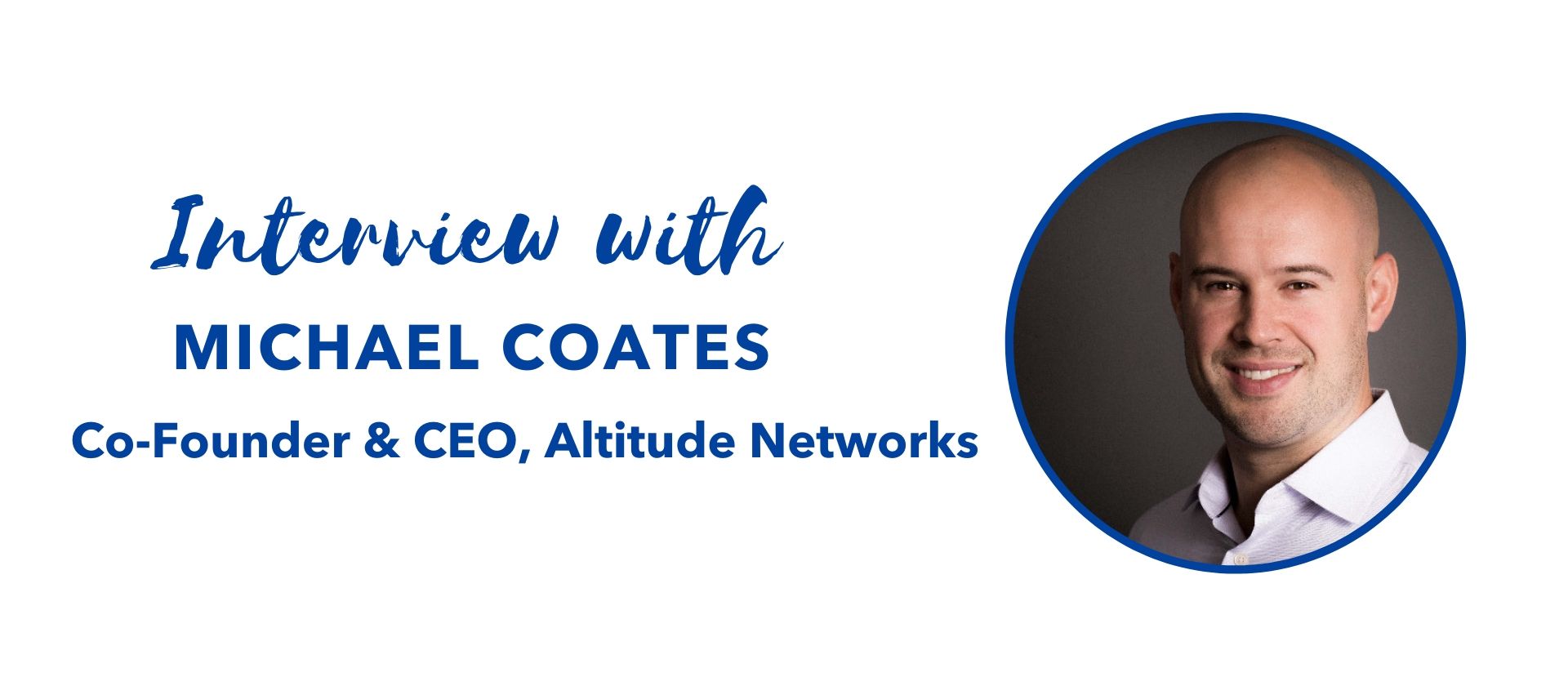
Interview with Michael Coates

Later this month, Cybersecurity executives from across North America will come together in Nashville, TN for our Transformational CISO Assembly. In anticipation, we had a chance to sit down with our Keynote Speaker, Michael Coates. Michael is the Co-Founder & CEO at Altitude Networks and former CISO at Twitter. we are honored to have Michael as a member of the Millennium Alliance Advisory Board.

Michael shared his insights on the changing role of cybersecurity executives, the biggest challenges in the industry and his role as an industry leader. Read on!


Despite what may be said in Hollywood’s portrayal of cybersecurity or even the marketing from some security vendors, you have to tackle the “basics” of security first. While this may seem easy from an academic perspective, achieving these core security tenants in any large organization, with numerous employees, constant deployments and a variety of technologies is actually quite complex.

This understanding of tackling core security challenges through automation is a key principle in how we’re designing our solutions at Altitude Networks. Security teams want to adopt tools that provide solutions to problems, not tools that require more work from the security analysts. As a result, we are striving to build a security solution for core data security challenges that works out of the box and does not require extensive configuration or “hand-holding” by the security team.

What expertise and knowledge did you carry over from your three years at Twitter to your new start-up, Altitude Networks? What knowledge has been key in leading both of these organizations through changes in the cybersecurity landscape?

A major piece of knowledge I took from my experience at Twitter was a great appreciation for tackling security from a first principles perspective and designing security for automation and scale. Second, it was a realization that in order to protect the most important element that a company contains, company data, you must move security as close to the asset as possible.

This “data first security approach” realization is an inversion of the “strong perimeter” defense we saw in the early 2000s. With the rise of outsourced workers, integrated business partners, and the adoption of cloud services and SaaS, the perimeter is no longer a trust boundary. Instead, security controls must be positioned wherever data lives with the assumption that an adversary could be someone in the world, or in control of a workstation inside your office. Further, security controls that require heavy amounts of human involvement don’t scale. Therefore, wherever possible security must be designed for accuracy and automation so we can build systems of automated defenses running continuously.

At Altitude Networks we’ve adopted the principles of “data first security” and “leveraging automation for scale” into the design of our security solutions. The reality is that massive amounts of sensitive enterprise data now lives in SaaS applications like GDrive, Box, Dropbox, Office365 etc. and security must be integrated into these applications to prevent security breaches like data loss, accidental sharing, or incorrect access permissions. As we tackle this problem we are aware of the necessity to leverage automation and minimize the amount of human interaction needed to provide continuous security across a massive amount of information.

Digital transformation is something businesses, organizations and institutions cannot ignore. Cutting-edge network technology like 5G is the next generation of tech, so what technology developments are you keeping your eye on and looking to implement into your cyber-strategy this year?

The continued dissolution of the enterprise perimeter is a key focus that changes security risk models and assumptions. This is driven by the transformation from pure on-prem data centers to cloud hybrid deployments via cloud platforms like AWS, GCP and Azure and also the adoption of SaaS applications. As a result, we see the efficacy of security solutions that were designed for a previous set of on-prem assumptions quickly failing. The next generation of security solutions will be cloud-first to tackle core security tenants as they manifest in the cloud stacks.

My advice for CISOs and heads of security is to reexamine your existing security controls and question whether they will still provide value if/when your company adopts IaaS, PaaS, or SaaS.

Digital technology has been driving cybersecurity practice over the past few years. As we find ourselves deeper and deeper in the era of digital transformation, what advice do you have for leaders to stay one step ahead of transformation?

The reason technology has been driving cybersecurity practices is that while the basic objectives of cybersecurity are unchanged, how these objectives are achieved does change dramatically based on the specific technology involved.

My advice for security leaders is to lean heavily on risk-based frameworks for determining where to focus your team’s attention. It’s easy to be caught up by flashy potential risk scenarios, but they might not be the best use of time from a risk reduction ROI perspective. Second, to stay ahead of the changing technology build relationships throughout your organization and share first principles of security with partner teams. By building strong relationships and focusing on core security principles, your partner teams can be advocates for effective and scalable security approaches that achieve your security goals without an overly cumbersome approach. Third, continue to evaluate security partners that are focusing on research and solutions on the new technology that, through your risk models, are high-risk areas for your business. It’s clear that for companies to succeed they must find ways to safely embrace new technologies without slowing or stifling the business.

In your experience, how has the role of a cybersecurity executive changed since you first began in the industry?

It’s changed dramatically in the fifteen plus years I’ve been in information security. For many years the concept of a cybersecurity “executive” did not exist. Security leadership was relegated to a team manager that was buried deep in the organization. Today, cybersecurity executives report to executive leadership, the CEO, or the board directly. The focus of the cybersecurity leader has also evolved. Previously, this role was tactical and very focused on specific technical issues. To be successful today a cybersecurity executive must drive strategy that is based on sound risk management concepts, understand changing technology to adopt and integrate the appropriate security controls, and also be an influencer across the organization to surface and escalate dangerous risks so partner teams drive them to resolution.

You have incredible knowledge of this industry. What do you think are the biggest challenges facing the industry and how can leaders overcome these challenges?

Security breaches can happen from a failure in any number of places in networks, operating systems, applications, purchased software or even people. When you think about it, the number of potential failure points is quite staggering and no one is impressed if 98% of them are secure, all the focus is on why 2% was vulnerable and led to a breach. Further, it’s not possible, or desirable to have 100% security. Instead, our goal is the appropriate levels of risk mitigation.

Therefore, the biggest challenge in security is where to focus attention and how to appropriately mitigate security risks. For the first, we must keep maturing as an industry to focus on the real problems that present a large risk based on risk modeling – not just flashy security topics we see in the headlines. Second, we must also realize that we are facing a massive scale problem. Security must rely on accurate automation whenever possible and security processes must be distributed by design. Gone are the days of security choke points or operations that can only be performed by a small number of security experts – it just doesn’t scale.

What makes a CISO successful in the modern world?

That’s a tough one. There are several traits that will greatly help a CISO be successful. First, a CISO must realize that they alone won’t be solving the organization’s security challenges. The CISO must obtain executive leadership’s support for security and establish a culture of security across the company. Second, the CISO must realize that they won’t, and shouldn’t, attempt to eliminate all risks. Risk is inherent in business and the ability for business leaders to make risk-based decisions can determine the time to market, tackling a challenging market opportunity, or even whether to enter a particular space at all.

As a result, a primary focus of the CISO should be to build tools, systems, and processes that systematically lower security risks across the company. Almost equally important is for these processes to surface high levels of unaddressed risks to business leaders, along with the appropriate context and understanding, so a risk decision can be made by the business leader.

The notion of ‘risk ownership’ by business leaders is still a new way of thinking with cybersecurity leaders, but I think it’s a key approach for a successful CISO. We must realize that business decisions involve risk tradeoffs every day and the appropriate business leaders must have the information to make those decisions – and also own the rewards or repercussions of the outcomes.

We are very excited you are attending and keynoting our Transformational CISO Assembly this April in Nashville. What are you looking forward to at the assembly?

The field of cybersecurity is very challenging due to the unique overlap of technical, business and human behavior impacts. It’s also an ever-changing field where the path to success is not always clearly defined. As such, I am excited to interact with other security leaders that are tackling similar problems across challenging and diverse organization across the country. I’m looking forward to sharing successful stories, approaches and even the challenges that we all face.

The cybersecurity industry is growing rapidly, yet still a small community, especially at the C-Suite level. Why is it so valuable for cyber executives to attend intimate assemblies like ours?

Building a strong network of security leaders is incredibly important for an executive to be successful in the field of cybersecurity. You can leverage this network to stay abreast of trends in security, to understand key security partners, or to aid in specific techniques or approaches to security problems. The best way to build this kind of network is through a small setting where you get face to face interaction with other security leaders. The Transformational CISO Assembly is a great opportunity to talk with other security leaders and build those connections that will help you throughout your career.

As a member of the Millennium Alliance Advisory Board, what excites you most about 2019?

Although the cybersecurity industry often focuses on our shortcomings, I’m excited about all of the progress we’re making as an industry. I believe 2019 will continue to show us that organizations who are bold and embrace new technology with integrated security can provide powerful products and technology to their users.

My hope is that one day soon security will no longer be seen as a cost center or ‘business drag’. Instead, it will be the catalyst that enables a company to safely embrace new technologies to deliver amazing products.

What is your favorite part of partnering with The Millennium Alliance?

Dedicated time with an amazing group of cybersecurity leaders from all over the country who are ready to share and learn from each other.

Thank you for joining us Michael, we are looking forward to your Keynote later this month.


About the Transformational CISO Assembly:

The Millennium Alliance is thrilled to present our bi-annual Transformational CISO Assembly, taking place in Nashville, TN.With the instances of cyber attacks increasing, businesses of all sizes are working tirelessly to secure their networks, devices, and data. Fortune 500 organizations are especially vulnerable as they have big data pools and thousands of people who need access. CISOs need to plan for worst-case scenarios, stay ahead of the latest IT Security transformation technology, and maintain their company’s information assets, all without losing sight of the corporate culture.

Are you interested in becoming a sponsor for this event? Click here today to learn more >>

Are you a CISO interested in attending this event? Inquire here today to find out if you qualify for Millennium Membership >>

Sit Down Interview with Conner Forrest, Analyst at 451 Research

Last month I had the pleasure to sit down with Conner Forrest, Analyst at 451 Research at our Digital Enterprise East Assembly in Charlotte, North Carolina. Many of the leading Technology & Cybersecurity C-Suite Executives came together and engaged in two days of workshops, roundtables and panel discussions.

Conner Forrest is an Analyst with the Workforce Productivity and Compliance team at 451 Research. His areas of focus are content management, HR tech, and corporate performance management. Before joining 451 Research, Conner worked as a senior editor with CBS Interactive, covering a variety of enterprise tech trends. He received a Bachelor of Science in Communication from the University of Louisville and a Master of Science in Journalism from Northwestern University.

A huge thanks to Conner and the team at 451 Research for joining us and sharing their expertise with us all. Check out the full interview here. 


About 451 Research:

451 Research is a global research and advisory firm. We generate the data-driven insight that empowers technology and service providers, IT leaders and financial professionals to capitalize on their market opportunity.

Hey, Alexa, Are You HIPAA Compliant?

Amazon recently released new software that makes its Alexa voice assistant compliant with the Health Insurance Portability and Accountability Act, more commonly known by it’s acronym, HIPAA, opening the door for the tech giant to strengthen its foothold in healthcare. This move opens the door to a broad array of uses for Alexa in homes and hospitals, allowing patients to receive updates from care teams, schedule a same-day appointment, find an urgent care center, check the status of a prescription, and hear their latest blood sugar reading to name a few.

The announcement marks a big step forward in the potential for smart speaker technology to meet the growing patient demands for consumer and convenience in the era of digital transformation. While healthcare companies have previously created Alexa skills, the lack of compliance with the landmark privacy rule was a significant roadblock to making tools patients could find useful.

“Every day developers are inventing with voice to build helpful and convenient experiences for their customers,” Amazon wrote in a blog post announcing the news. “These new skills are designed to help customers manage a variety of healthcare needs at home simply using voice.”

Now that consumers will be able to use new Alexa health skills to ask questions such as “Alexa, pull up my blood glucose readings” or “Alexa, find me a doctor,” third-party health developers who follow certain guidelines can sign business associate agreements with Amazon under HIPAA, opening the door for further collaboration between healthcare providers and the online giant.

Voice technology like Amazon’s Alexa and Apple’s Siri has been continually hailed as a major breakthrough for healthcare, particularly for seniors, kids and those with mobility problems. As a result, Amazon, have been increasingly focused on the needs of these populations, who view voice assistant devices as an important way to manage their medications, communicate with loved ones, and alert emergency services.

Demonstrating how the digital data revolution is empowering patients, the feature from Boston Children’s Hospital will allow patients and caregivers to “share recovery progress with their care team post-surgery,”said the hospital’s Chief Innovation Officer John Brownstein in a statement provided by Amazon.

“We believe it is just one example of how voice technology can extend the care and support of our patients beyond the four walls of the hospital,” he said.

With more than 100 million Alexa-powered devices sold to date, Amazon’s move could become a big splash as more and more consumer-focused tech companies rush to meet HIPAA privacy standards for transmitting protected health information.

ABOUT THE DIGITAL HEALTHCARE TRANSFORMATION ASSEMBLY

The future of healthcare is digital. With the FDA providing clarity with the launch of new regulations regarding digital technology in 2018, developers and healthcare industry stakeholders alike are working to transform the patient experience.

The healthcare landscape is changing. The on-demand patient increasingly favors digital technology and platforms. According to Pew Research, a third of Americans have gone online and searched symptoms, in an attempt to diagnose a medical condition.

The US healthcare industry is unique, as it markets direct-to-consumer or direct-to-patient. Digital marketing technology is enabling healthcare marketers to talk directly to consumers in a new, more engaging way.

The Millennium Alliance is pleased to announce our bi-annual Digital Healthcare Transformation Assembly will be taking place on June 11-12, 2019.

Are you interested in becoming a sponsor for this event? Click here today to learn more >>

Are you a Digital Healthcare Executive interested in attending this event? Inquire here today to find out if you qualify for Millennium Membership >>

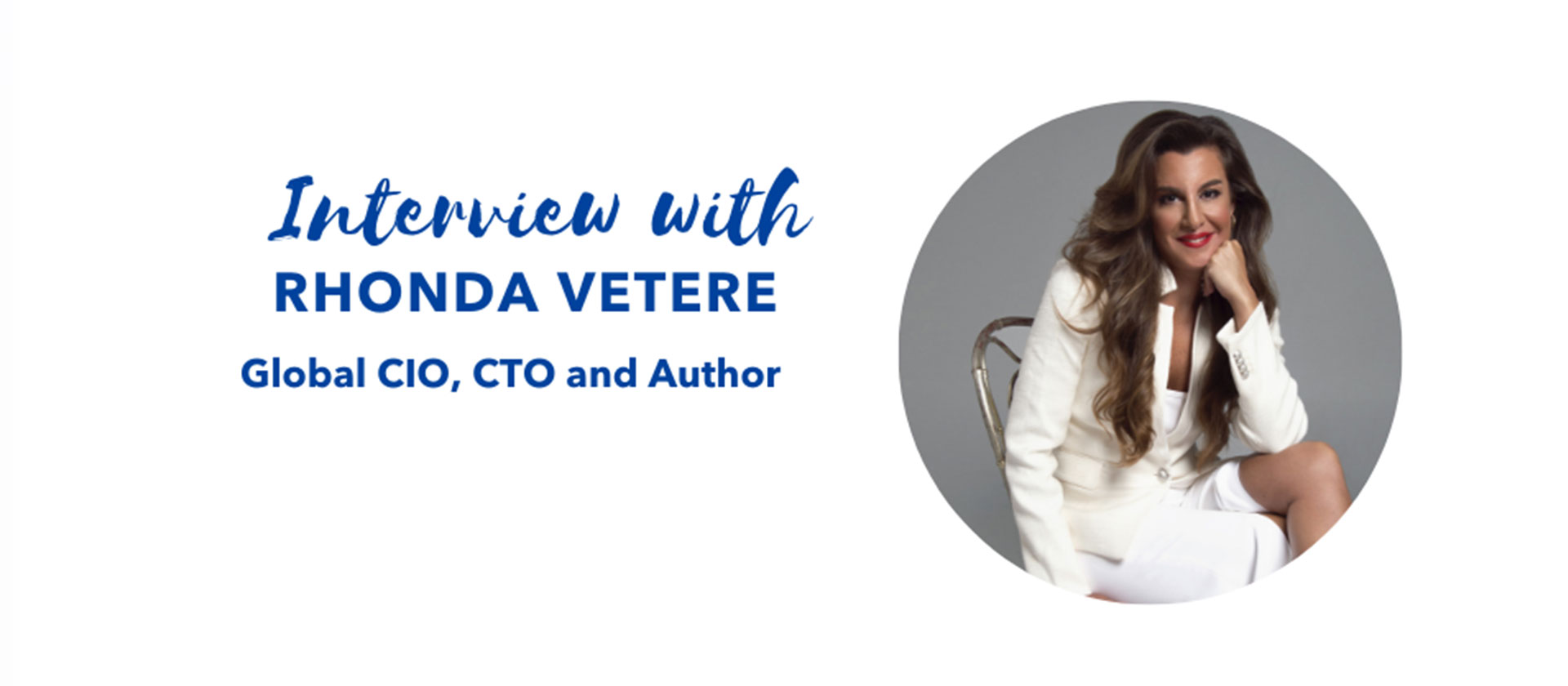
Sit Down Interview With Rhonda Vetere

Last month I had the pleasure to sit down with Rhonda Vetere at our Digital Enterprise East Assembly in Charlotte, North Carolina. Many of the leading Technology & Cybersecurity C-Suite Executives came together and engaged in two days of workshops, roundtables and panel discussions. One of the highlights of the event was our Gala Dinner where Rhonda inspired the attendees with her Keynote Address.

Rhonda is a Global CIO, CTO and Author of her new book Grit & Grind the 10 principles for living an extraordinary life.  As a global business icon, Rhonda has worked for several of the biggest companies in the world, managed mergers and acquisitions and navigated some of the worlds biggest challenges.

Rhonda and I sat down to discuss her career as a Global Business Executive and the role of Technology in the Digital transformation workforce. Rhonda shares with us her passion for developing the next generation of leaders, marathon running, sports and insights into her fantastic new book Grit & Grind, 10 principles for living an extraordinary life.

A huge thanks to Rhonda for joining us and inspiring us all. Check out the full interview here

About Rhonda Vetere:

Rhonda Vetere is a seasoned C-Suite technology executive who has worked across industries in global technology. A change agent for digital transformation, she has led the way for growth with more than 23 mergers and acquisitions at companies.

A passionate leader in technology across industries, Rhonda has worked in global executive positions at Estée Lauder Companies, AIG, HP Enterprise Services, Barclays / Lehman, Bank One / JPMorgan Chase, CompuServe, UUNET, MCI, and Worldcom. She has lived and worked internationally – in New York, Hong Kong, Singapore, London, Mumbai, and across India – and has managed teams of more than 20,000 people.

As an industry expert and influencer, Vetere has been a keynote speaker and panelist at many conferences and events, including World Economic Forum/Davos, WIT (Women in Technology) Connect, Microsoft Global CIO Summit, Dell EMC World, and the U.S. Vice Presidential Candidate Debate. Rhonda has been recognized with for her leadership and influence, notably with a 2017 Stevie Award for Excellence in Transforming Business and as a multi-year Top 100 CIO/CTO Executive Leader in STEM by STEMconnector. Grit & Grind is Vetere’s second book – she is also the co-author of an HP special edition book, Enterprise Service Management for Dummies. An avid sports fan and real-world corporate athlete,

Rhonda stays focused and sharp by competing in marathons and triathlons on a regular basis – over 70 events thus far, including triathlons, half-marathons, marathons, and IRONMAN 70.3 mile triathlons. She recently ran 55 miles in the Serengeti as part of a girls and women’s empowerment fundraiser: the first women-only run of its kind.

What Is A Data Company?

While it’s more straightforward and obvious for those that have started out as digitally-native companies, like Netflix, to think data-first, it’s a lot harder for legacy companies that are just beginning their digital transformation journey.

This article is written by Sanjeev Sharma, Vice President, Global Practice Director – Data Modernization at Delphix.

Imagine a company with a $13 billion annual budget and 139 million customers across 120 countries. The company is also in the entertainment media industry, which is traditionally known for making gut decisions by Hollywood buffs, TV personalities, and entertainment moguls.

“Nobody knows anything. Not one person in the entire motion picture field knows for a certainty what’s going to work. Every time out it’s a guess and, if you’re lucky, an educated one,” William Goldman, screenwriting star, famously quoted in his book Adventures in the Screen Trade.

And this media company uses data to collect deep insights into every customers’ preferences and usage habits in real-time, empowering them to make almost all strategic and tactical business and operational decisions based on data.

You’ve guessed it – this company is Netflix. Unlike its rivals, who are legacy media behemoths, Netflix uses data to drive every decision, from content development to its creative and marketing strategies. There’s no doubt Netflix is a modern data company in today’s digital era, and its impact is felt across industries.

How Much Data Does Netflix Use?

Netflix has emerged as a titan in the media industry. Netflix CEO Reed Hastings told CNBC he sees the business as “mostly a content company powered by tech.” But its digital business model has allowed the company to collect huge amounts of customer data, which in turn has powered their success. Netflix is built on the power of data, which has enabled them to successfully compete with major movie studios, TV networks as well as tech giants, like Apple.

Data exists everywhere within an enterprise, including databases, data warehouses, data lakes, CRM tools, and ERP systems. But in order to leverage that information, it’s critical you understand how to access, refine, apply, and manage that data to make smart business decisions. For Netflix, the brand’s data philosophy encompasses 3 key tenets:

  • Data should be accessible, easy to discover, and easy to process for everyone.
  • The longer you take to find the data, the less valuable it becomes.
  • Whether your dataset is large or small, being able to visualize it makes it easier to explain.

This data philosophy has enabled them to uniquely personalize the Netflix experience for each and every one of their customers through data collected on subscriber viewing habits, recommendations, ratings, and more. While it’s more straightforward and obvious for those that have started out as technology-based companies, like Netflix, to be digital and think data-first, it’s a lot harder for legacy companies that are just beginning their digital transformation journey.

Why Your Data Strategy is Failing

If you’re not yet a market leader and slow to adopt changes, how do you fight back? Think DataOps. DataOps is an emerging approach to addressing data-related challenges. It spans change across process, technology, and people to help an organization become a data company. Research by leading analyst firm 451 Research found that enterprises around the world are planning a significant investment in the ever-growing discipline of DataOps.

Let’s take a step back and think back to the first two core tenets of Netflix’s data philosophy: one – data should be accessible, easy to discover, and easy to process for everyone; two – the longer you take to find the data, the less valuable it becomes. These are the core challenges that enterprises face when it comes to maturing into successful data companies.

In most organizations, the access and availability of data is controlled and managed through a centralized group of database administrators (DBAs) with no self-service capabilities for practitioners who need data. Data access and availability remains a set of ticket-driven manual processes with excessive workloads being put on the DBAs to do repetitive low-value tasks. But data should be accessible by those who need it, when they need, and where they needed in real time.

As organizations evolve to newer, modern technology stacks without retiring older stacks completely (still waiting on the mainframe to go away as predicted in the 90s), or through acquisitions where they bring in an entirely new set of platforms, data is sprawled across heterogeneous sets of data stores – many of which are not compatible with each other and may even have multiple versions of the same database in use in different parts of the organization.

This sprawl of data store technologies further expands with the addition of cloud-native, fit-for-purpose data stores that developers are beginning to adopt as they develop new cloud-native applications, which have a different need as opposed to traditional relational databases.

In addition, most companies lack even basic inventories of their data. The absence of good data classification makes it difficult, or in most cases, impossible to manage and govern data based on its risk-value profile and category. All the data ends up being treated in the same manner, with the same governance overhead and restrictions, which makes data less usable than it can be, and of course, makes it difficult to find the right data. You simply can’t manage what you don’t understand.

Adopting DataOps to Win the Innovation Game

A recent NewVantage Partners survey revealed that all is not good in the world of big data, artificial intelligence (AI), and machine learning (ML). Fifty-three percent of respondents reported they’re not treating data as a business asset while 52 percent admitted they aren’t competing on data and analytics.

These are staggering statistics given the focus we, as an industry, have had in big data, analytics and AI/ML initiatives. The reason behind these dismal results are front and center: organizations have not yet forged a data culture. They have not transformed their organization into a data company, like Netflix.

Organizations need to rethink their data management and governance processes as well their data-related technology stacks, and most importantly, companies need to reconstruct their organizational structures to build a data-driven culture.

DataOps is an emerging approach to addressing data-related challenges. It spans change across process, technology, and people (culture) to help an organization become a data company. Findings from the latest 451 Research report shows enterprises around the world are planning a significant investment in the ever-growing discipline of DataOps.

These challenges are not trivial to address. A foundational change in how data is accessed, managed, secured, and leveraged across the enterprise through a DataOps approach is essential in dramatically modernizing your data strategy while achieving regulatory compliance with today’s new privacy laws and growing number of data breaches. On the flip side, addressing the organizational and cultural challenges is a whole different ball game that requires an enterprise-wide transformational effort that senior leadership will have to drive from the inside out, but we’ll save that story for next time.You have more data in more places than ever before. Learn how our DataOps platform can make data fast and secure for access across your enterprise.

If you like what you read, you can meet Delphix at our Digital Enterprise Transformation Assembly in Miami, Florida on June 25-26th to learn more.

ABOUT DIGITAL ENTERPRISE TRANSFORMATION ASSEMBLY 

The Millennium Alliance is thrilled to present our bi-annual Digital Enterprise Transformation Assembly, put together by the industry, for the industry. Join us in Miami, FL. for a series of executive education roundtables, keynote presentation

ns, collaborative think tanks, educational workshops, and networking sessions will offer industry-specific topics and trends to ensure your company maintains its competitive advantage.

As more and more businesses look to digital technology and strategies to transform their business, CIOs know that data and information technology have never been more important. Understanding the convergence of mobile, social, and cloud is the first critical step for organizations looking to create opportunities and stay ahead of the competition.

Are you a CIO or CTO interested in attending this event? Inquire here today to find out if you qualify for Millennium Membership >>

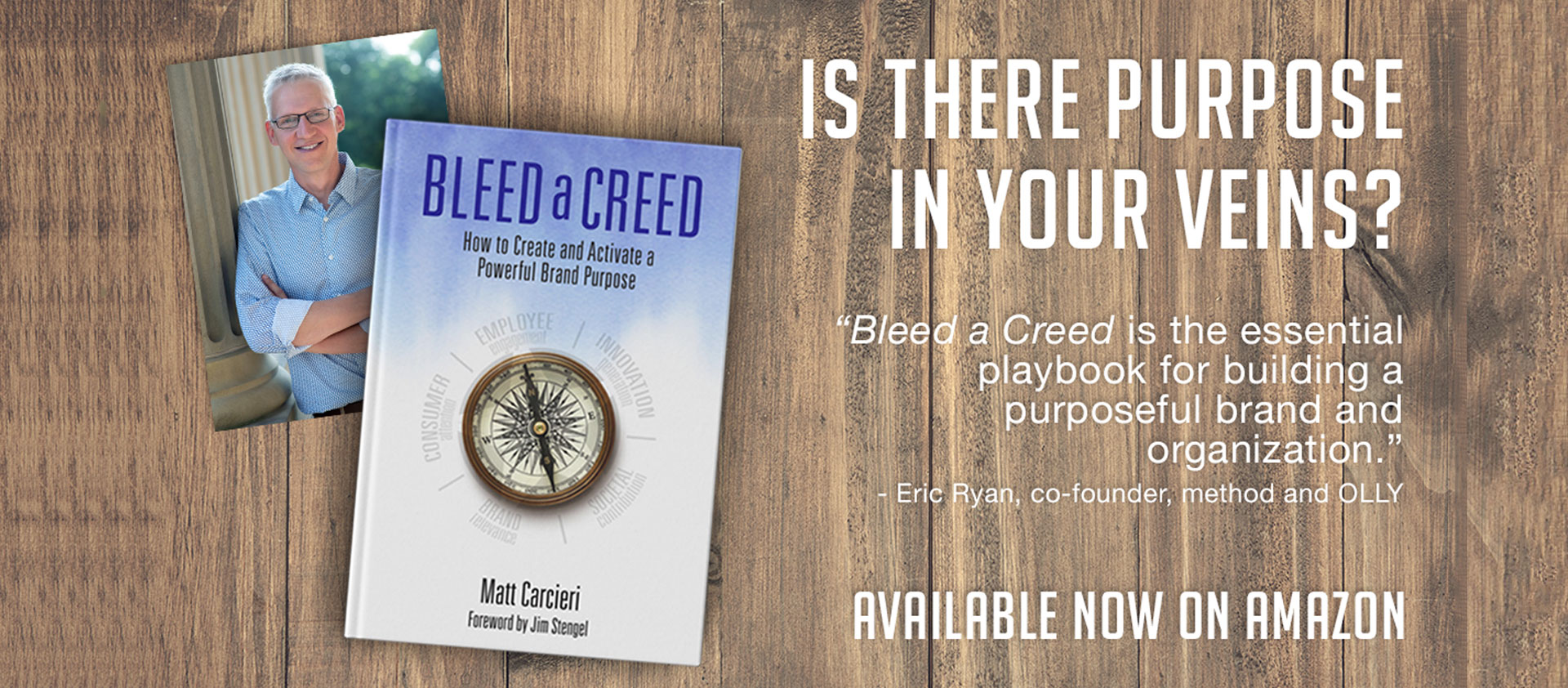
Bleed a Creed: Is There Purpose in Your Veins?

In his new book Bleed a Creed, top branding expert Matt Carcieri gives the why-to and how-to to everyone looking to overcome the “purpose challenge”: the challenge to finding a true devotion and embedding it within your organization, brand, and operations. This navigational guidebook features a foreword by Former Global Marketing Officer of Proctor & Gamble, Jim Stengel, and seven instructive chapters to guide you on a course to successful activation. Matt is currently a partner with Jim Stengel at The Jim Stengel Group, and also a proud partner of The Millennium Alliance.

Purpose offers tremendous promise for business.  

According to recent studies, 80 percent of companies that over-perform on revenue growth link everything they do to purpose, and brands with a purpose have outperformed the stock market by 120 percent.  Other studies show that Millennials are five times more likely to stay with a company when they have a strong connection to its purpose; and consumers are more likely to advocate for a brand after hearing about its stand than its product features.

But for the majority of companies and brands, the promise of purpose is not their reality.  That’s because their purpose is a platitude; it doesn’t represent a heartfelt devotion that’s authentic to the DNA of the enterprise.  And more often than not, leaders haven’t taken the actions that are required for it to penetrate the mechanics of the business.

In this navigational guidebook, Matt Carcieri helps you overcome the “purpose challenge”: the challenge of finding a true devotion and committing your organization to a more purposeful path to growth.  Seven instructive chapters explain why great purpose starts with a definitive creed – a unique point of view – and then guide you on a course to successful activation.

Order Breed a Creed: How to Create and Activate a Powerful Brand Purpose on Amazon >>


PRAISE FOR BLEED A CREED

“Bleed a Creed is the essential playbook for building a purposeful brand and organization.  You will be inspired to build your own business with a unique point of view and armed with lessons to make it happen.”

  • Eric Ryan, co-founder, method and OLLY

“A veteran practitioner of purpose, Matt has created a practical roadmap to seizing the opportunities that purpose unleashes.  This book is a powerful resource for anyone who’s on the purpose journey – whether starting out or climbing its peaks.”

  • Roy Spence, co-founder & chairman, GSD&M / co-founder & CEO, The Purpose Institute

“Matt Carcieri knows the key insight to successful branding practice: consumers don’t just buy brands, they live lives; and into those lives, successful brands with purpose come.  Read this rich workbook and benefit from Matt’s wisdom, experience and frameworks to help your brand lead a purpose-driven life.”

  • Susan Fournier, Allen Questrom Professor and Dean, Boston University Questrom School of Business

“When the alarm rings at 5:30 and your first thought is market share or market cap, just go back to sleep.  You’re missing the point. And the rewarding path. And the rich possibilities… as Matt Carcieri reveals.”

  • Bob Garfield, co-host of On the Media and coauthor of Can’t Buy Me Like

“Matt has catalyzed a movement across our company that is step-changing engagement and innovation.  In this book, he shares the tools of his trade, providing a concrete roadmap to unleashing the full power of purpose.”

  • Jeff Boutelle, CEO, Pharmavite

“Matt completely redefined my company based on these principles, and it allowed us to shoot from last place in our category to second.  Bleed a Creed shows you the path to get there.”

  • Greg Stuart, Global CEO, Mobile Marketing Association

“Matt has helped us immensely on our Purpose journey to drive competitive advantage by inspiring our people.  I highly recommend him and this book as your guide to help you carve your own path.”

  • Jason Anderson, Senior Vice President Marketing, Cadillac Fairview
Join the hype and order your copy today >>


ABOUT THE AUTHOR

Matt Carcieri is one of the world’s foremost “purposologists,” having worked on purpose with more than a hundred companies and brands.

He began his career as a marketing executive at Procter & Gamble, where, for fifteen years, he pioneered purpose-driven brand building inside the world’s largest advertiser. As an in-house expert on the topic, he spearheaded purpose work on most of P&G’s billion-dollar brands.

Today, he is an independent consultant and an affiliate of The Jim Stengel Group, a think tank and consulting practice founded by the former CMO of P&G.  In those roles, Matt has helped to define and activate purpose for companies across a variety of industries – from financial services and insurance to health care and hospitality.

Matt holds an M.B.A. from Georgetown University and has co-authored works in three marketing compilations, including Kellogg on Branding (Wiley, 2019).  He is a sought-after speaker on both the business and college circuits.

He lives in Cincinnati, Ohio with his wife and three sons.