Announcing the Release of the 3rd Edition of the Digital Diary Magazine

We are thrilled to announce the release of the 3rd edition of the Digital Diary Magazine, a direct result of the efforts of our Research and Content team that shares in-depth stories, tips, interviews and case studies of today’s most creative and innovative digital business transformation strategies and technologies.

Download the 3rd edition of the Digital Diary Magazine here >>

In today’s crowded digital landscape, the Digital Diary Magazine hopes to provide you with a quarterly digest of the latest digital business transformation strategies and technologies that are affecting every industry from Marketing to Cybersecurity. Based on content collected from our Membership, Advisory Board, Thought Leaders, Speakers, and Sponsors, this Magazine has all you need to know in one, cohesive place.

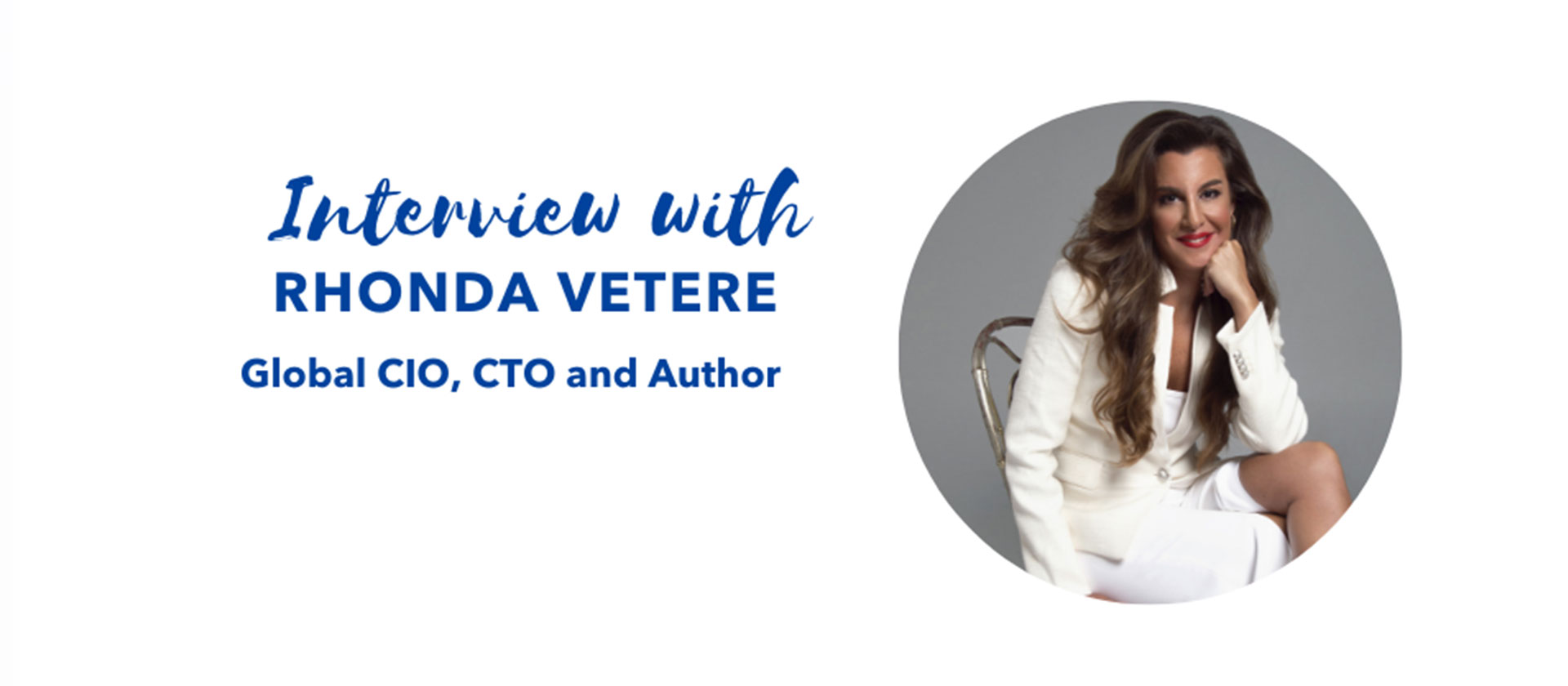
The 3rd edition of the Digital Diary magazine looks into the future of transformational technology to how the decisions made by C-Level executives are impacting their industries as we progress into 2019. With your download of this edition, you will e-meet and get to know our cover star and upcoming Digital Enterprise Transformation East keynote, Rhonda Vetere, Global CIO, CTO and Author.

Discover all of the most pressing issues in the industry in our leading digital magazine and on the #1 online resource for C-Suite Digital Transformers. Subscribe today to Digital Diary to receive the most current and up-to-date blogs right into your inbox!

Top articles and interviews from the 3rd edition include:

  • “We enable those who think differently and to be innovative” Interview with Sertainty
  • 2019 Advisory Board Meeting Highlights
  • “Don’t go for the shiny and bright objects just because they are cool” Interview with Mike Howard, Retired CSO of Microsoft
  • The Challenge for Content Creators Today
  • Living an Extraordinary Life with Rhonda Vetere, Global CIO, CTO, and Author
  • Technology Only Works if your Enterprise’s Culture Works with It
  • Predictions 2019: The Year Transformation Goes Pragmatic by Forrester

Did you miss it the first time? Download the 3rd edition of the Digital Diary Magazine here >>

Happy reading!

About The Digital Diary Content Team:

– Catherine Hand is the Marketing Coordinator at The Millennium Alliance and Editor of Digital Diary. A recent graduate of Siena College in Albany and New York newbie, Cat assists and leads the creation of Millennium content such as the implementation of social media, brochures, the event agendas, brochures, E-Books, and frequently writes blogs on Digital Diary. When she’s not working, you can catch her listening to music or exploring the New York food scene. You can connect with her on LinkedIn.

– Jenny Schecher is a Client Services Director & Social Media Manager at The Millennium Alliance. Jenny is an avid contributor to our blog, Digital Diary, as well as all social media platforms. When she is not writing about digital transformation and technology, she is working with her team to make visions come to life at our events (and eating all of NYC’s best food.) Follow her on Instagram: @jennyschecs or find her on LinkedIn!

– Cara Bernstein is Manager, Executive Education Partnerships at The Millennium Alliance. She works with Thought Leaders at the Millennium Alliance assemblies and is also a contributor to Digital Diary. Cara writes about different industries preparing for the digital revolution. You can catch Cara on LinkedIn and on twitter @CaraBernstein

Is Your Email Vulnerable To Threats? It’s Time To Find Out

If you are a business professional, chances are you are using your email throughout the day to communicate with your peers, business associates, employees and more. Since email is such a prominent business tool, it is important to know the risks that come with sharing confidential information on this platform.

The Risks Within Email

According to a new report released by our Sponsor Agari, an email security solution company, email scams are related to an increase in hijacked email accounts. This data was collected from October through December 2018.

“20% of Advanced Email Scams Now Launched from Hijacked Accounts” Agari reports.

If this doesn’t scare you, it should. If your email is vulnerable to an attack, your business is threatened as well.

The Solution

The good news? Agari offers not only a perfect solution to protecting yourself against attacks that threaten your confidentiality through email but also the knowledge that powers these important decisions through their exclusive whitepapers.

Being informed is the first step to protecting your email from potential threats. Luckily, Agari’s whitepaper does just that.

Download Agari’s latest whitepaper here to learn more about the statistics regarding email hacking, threats and more. 

ABOUT AGARI download.png

Agari was founded by the thought leaders behind Cisco’s IronPort solution and co-founders of the DMARC standard for email authentication. Using predictive AI informed by global intelligence from around 2 trillion emails annually, we protect organizations against phishing, business email compromise (BEC) scams, and other advanced email threats.

ABOUT TRANSFORMATIONAL CISO & FINANCIAL SERVICES CISO ASSEMBLYciso_national_v1

The Millennium Alliance is thrilled to present our bi-annual Transformational CISO Assembly, taking place in Nashville, TN. With the instances of cyber attacks increasing, businesses of all sizes are working tirelessly to secure their networks, devices, and data. Fortune 500 organizations are especially vulnerable as they have big data pools and thousands of people who need access. CISOs need to plan for worst-case scenarios, stay ahead of the latest IT Security transformation technology, and maintain their company’s information assets, all without losing sight of the corporate culture.

Are you a CISO interested in attending this event? Enquire here today to find out if you qualify for Millennium Membership >>

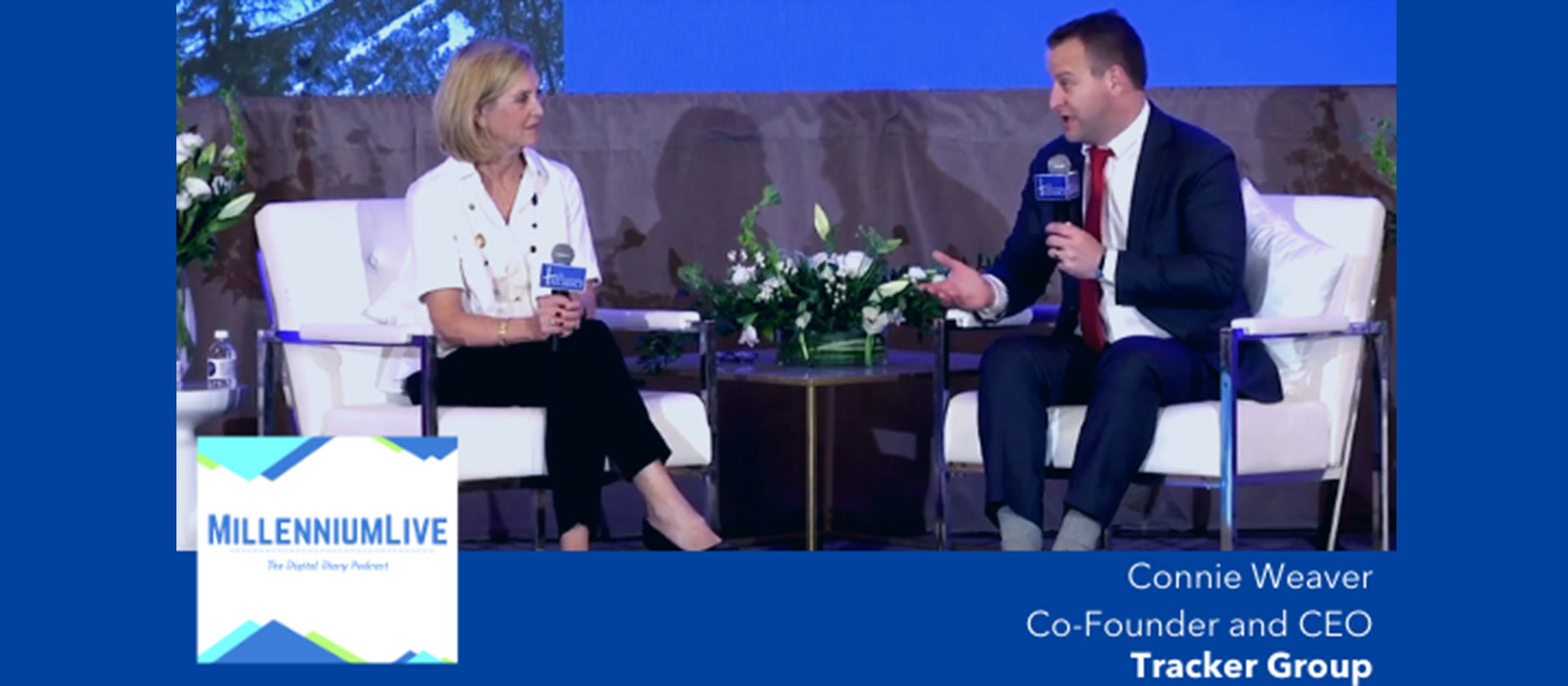
Co-Founder and CEO of Tracker Group, Connie Weaver, Featured in This Week’s Podcast Episode

Joining us on this week’s podcast is Millennium Alliance Advisory Board Member and Co-Founder/CEO of Tracker Group, Connie Weaver.

Before starting Tracker Group, Connie served as Senior Executive Vice President and Chief Marketing & Communications Officer at TIAA, where she led the successful transformation of the Company’s marketing strategy and digital experience. In this episode, we get to hear all about how she built the iconic TIAA brand, the changes she’s seen throughout her 35 year career, and so much more.

Listen and Subscribe here >>

Leading the Future Generation in the Changing Global Technology Era, A Conversation with Rhonda Vetere.

Looking back on your amazing career, what inspired you to become a technology leader?

I became interested in technology accidentally. I was in a business role when someone in senior leadership saw my potential in my leadership abilities, so I moved into a technology role; it was the best thing that happened. As a hiring manager, I find talent in similar ways, whether it be a few levels down, or from another business unit. If I see someone who has characteristics that would be a good fit, I often offer them an opportunity and find myself at times having skip levels with all levels within the organization to find out if people are in the right job fit and happy what they are doing.

From your all your experiences as a leading Technology Executive, your expertise in technology and data runs deep. Reflecting on your rich experiences, what is one experience that you lean on in 2019 to help guide your teams?

The experience that I will lead on in 2019 is change management with the aspect of human touch.  The world is rapidly changing all around us and leading a global team through changing technology, people and process are key.  Staying relevant means adopting change management within the fabric of your Team.

You have led global technology infrastructure at many of the world’s biggest companies, from finance to insurance to retail, what lessons have you learned from all your experiences that can help executives lead their businesses in the ever-changing digital era?

I have learned that technology doesn’t stop. I have also learned how important it is to travel globally and embrace other cultures. I have also learned that you need to be business focused and results-oriented. Transformation needs to drive value back to the business— often Leaders forget in the heat of the battle the business outcome that you are driving for overall.   As an executive, you need to measure the pace, risk management and stakeholder engagement on the outcome that you are driving.

Since the world is changing more rapidly than ever before, the challenge now for companies is keeping up with that change. What are the most important things companies should remember in the digital era?

Think globally. Read the news. Know your audience. Innovate and know the end to end consumer journey. Map out the end to end process of your Companies consumer journey.  Each Industry has different aspects of high touch, identify those and focus.

What inspires you to shake things up when establishing security or technology practices and what gave you the confidence to move forward with an idea that was out of the ordinary?

What always inspires me is doing the right thing to drive results. Confidence is gained by doing this several times across multiple Industry’s, leaving a legacy and having to come back time and time again to the Board to report out on items.

What advice would you offer to Global Technology Leaders leaders as more and more people, especially attackers, become more connected and digitally fluent?

Be in tune to phishing and strange email links and actors in the environment.  I have seen many executives click on links that they shouldn’t even though they know better.

In your opinion, what makes a great excellent leader across all sectors?

Someone who leads by example. This is so key for all leaders. Employees want to feel valued and supported. They want to know that you have their backs. People will be more loyal to you if you treat them fairly and show appreciation for their hard work and dedication.

Some defining attributes for a leader include resiliency, work ethic, the ability to prioritize and say no. Aspiring leaders and leaders can take their skills to the next level by finding a mentor they trust and working with them to improve different skills. They can also be sure to lead by example. That is something that I feel so strongly about.

You are a very successful woman in the tech industry, and unfortunately, there are not as many women in positions such as yours. To what do you owe your success and how would you encourage other young women who are pursuing a career in tech to succeed?

As I mentioned before, I did not start out in a technology role. I was selected by a mentor because of some of the traits that I possessed and my work ethic.  My advice is to younger women is to also get over that STEM is fun and slick! There has been a cloud over the topic and it is a hot market to be in and technology is where you want to be!

Always have your 30-second elevator speech to answer two questions; How are you and what are you working on? This is important so he or she leaves the elevator knowing who you are.  Lastly, utilize sports acumen in business conversations. It is very relatable and gets people engaged.

Even though you have already had an immensely successful career, where do you see yourself or your career heading towards in 2019 and beyond?

Thanks for saying that. I plan to spend time speaking globally to girls and women about STEM. Being a mentor and a role model is such an important part of my leadership style.

What do you think are the benefits are for a C-Level executive in attending a small, intimate assembly such as ours?

There are so many benefits to attending an event like yours. Firstly, making connections with others. Often folks become so focused on what they are doing within their organization that they do not stop and think about how they can leverage others and that there may be more innovative ideas out there. Coming to a conference like this and seeing what others are doing can help you apply some of these ideas to your current position.

We are very excited you are attending and keynoting our DET and FSI Transformation Assemblies next month in Charlotte, NC. Can you give us a sneak preview as to what you will be speaking on?

I will be speaking on my journey as a leader. I always want to encourage others to reach their full potential. Mentorship will be another topic that is covered. I also will be talking about some of the principles in my upcoming book. Grit and Grind.

Congratulations on your new book Grit & Grind, Can you share with us and our readers a teaser and what stands out to you from this experience?

This was an incredible experience.  The purpose of this book was two-fold. One was to help people to learn, no matter what their background is.  The other is to leave behind a legacy. I am at a point in my life and in my career where I just want to teach people along their path and make a difference. So the purpose of this is to help folks in their lives daily, their work life, and show them real examples of what it takes to maneuver and navigate through tough situations with real substance behind it.

There are lots of surprising situations that I highlight in the book, everything from being a part of worldly events around the world—- 911 to the DMZ in Korea and the stories all tie back to lessons learned and ways that others can apply these to their lives. Most importantly no matter what gender, age or where you are in your life you will learn something reading this book.

Thank you Rhonda, we are looking forward to your keynote in a few weeks!

About the Digital Enterprise Transformation East Assembly

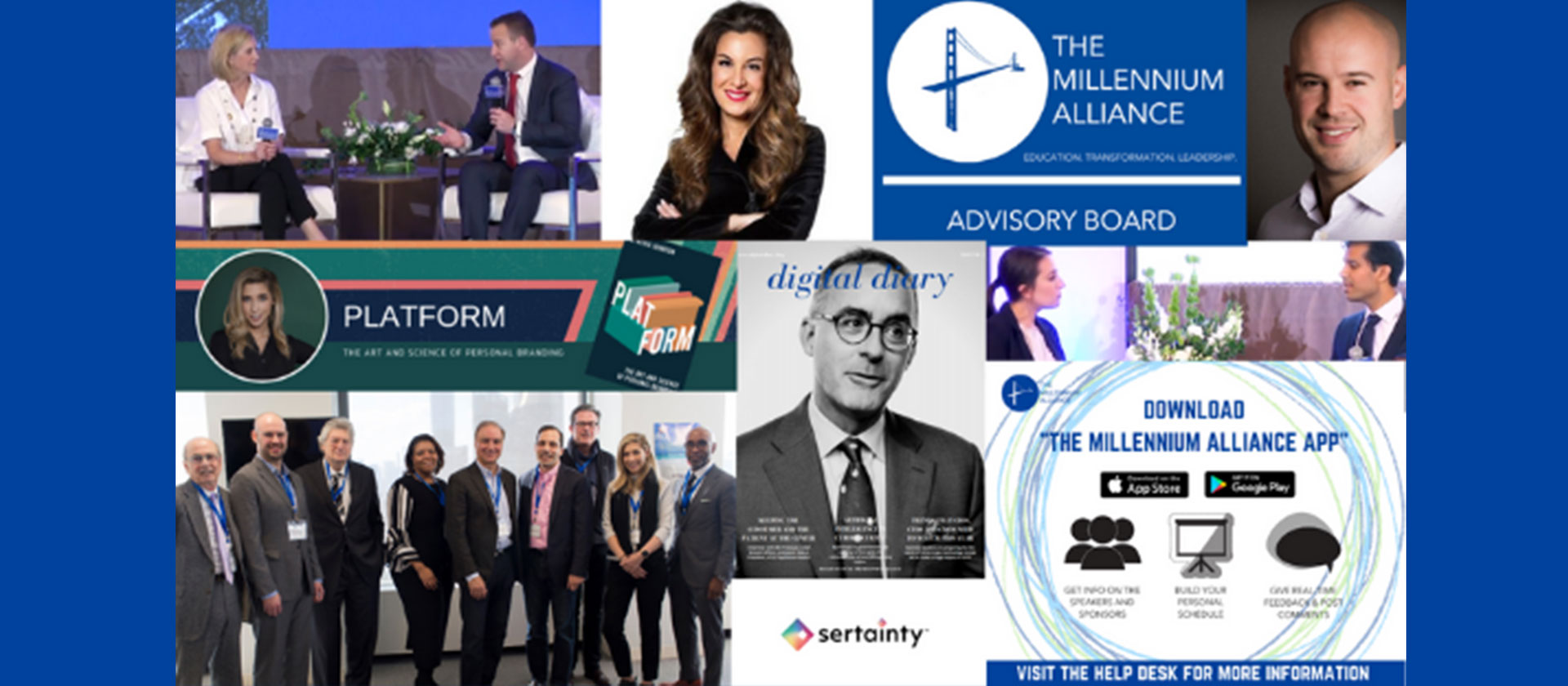
Thanks to the success of our Digital Enterprise Transformation Assembly series, in https://event.mill-all.com/digital-enterprise-transformation-east/2019 The Millennium Alliance in partnership with our Advisory Board, we are adding more events to the list! This exclusive Assembly will bring industry experts and the best solution providers to our Senior Members based on the East Coast.

As more and more businesses look to digital technology and strategies to transform their business, CIOs know that data and information technology have never been more important. Understanding the convergence of mobile, social, and cloud is the first critical step for organizations looking to create opportunities and stay ahead of the competition

How Can Financial Services Connect To Their Customers?

If it is one thing that is for sure, it is that technology is everywhere, and growing at a rapid speed. Tech has changed the environment of many industries, and the financial services industry is no exception.

Banks are adapting to new technology that is constantly developing in order to connect with their customers. Before making the plunge into a technology forward landscape, first, it is important for organizations to understand the tools that are transforming this relationship, as well as what customers would be beneficial to target.

The Connected Customer

The connected customer: someone who wants things to be done quickly, efficiently and probably from the comfort of their wifi signal. This customer has emerged in the digital age we live in today and they are likely to conduct all banking actions online. We can thank online banking for creating this kind of customer, as well as the development of smartphones.

“In fact, having the ability to stay on top of account balances has become not just what consumers want, but what they expect,” Techopia reports.

Since this customer has become so prevalent in this sector, we have seen businesses move towards innovation by integrating mobile banking apps and online banking into services. Meeting up with the demands of this mobile-friendly customer has to be a priority if your business is interested in connecting with them.

Getting customers to use your banking app may not be the challenge. The challenge may be getting them to stay. So, what qualities do banks possess that create poor relationships with their customer?

Not Enough Trust

It is no surprise that customers who use online banking are expecting a level of trust back from the bank. I mean, after all, they are providing the bank with personal financial information. It is the bank’s responsibility to make sure that there is a level of trust associated with the business, in order to keep customers loyal. Without trust, banks fall short.

“Banks consider trust a strategic imperative both because it is a key predictor of advocacy and future business and because the impacts can be highly destructive if it is eroded.” EY reports.

I drew insights from EY’s report on consumer trust within banks. I found keen insights that can help push banks toward building trusting relationships.

“Inspire a customer-centric culture by setting the right tone from the top and using the right incentives at every level of the organization”

Basically, this means that when the bank shifts its culture, the change must align with the entire organization. This can be done by making initiatives clear and strategic. These actions must align with the goals of the bank, which are most likely to meet the customer’s needs.

“Culture — like trust itself — is an intangible force, though there are specific steps banks can take to strengthen their culture around trust,” EY reports.

The organization can accomplish this by providing employees with the proper information that will allow them to make the intended changes. This will be beneficial because then employees will be able to provide customers with the right information in case anyone inquires. Many organizations take advantage of employee training to implement these initiatives. Teaching employees the goals of the organization on their first day sets the tone for the rest of their time on board.

This takes senior management to be aligned in order to carry a message to the employees.  Once a customer sees that the bank is consistent with their message, it makes the bank appear credible, thus, creating customer trust.

“Deliver complete transparency in product features and transaction fees”

Transparency brings trust. It is really as simple as that. When a bank is transparent with their message, it means that customers know what is going on from the start. EY’s report reveals that customers who see transparency within the organization are more likely to recommend that bank to someone else.

“The implication: fee transparency is a driver of advocacy and future business for banks; if customers do not feel the bank is being transparent about its fees, they are less likely to recommend the bank to others,” EY reports.

Banks can be transparent in a few ways. For starters, the bank can deliver on the promises that it offers customers, like the services or products that are found through the organization. Transparency can also be found in the bank’s message, logo, branding, and fees.

“Proactively protect customer data like it’s your own — and defend against cybersecurity threats”

It’s a no-brainer that customers will trust a bank that goes to great lengths to protect their financial data. Customers are extremely concerned with the issue of cybersecurity when it comes to their data. When banks go to great lengths to make sure that data is protected, it will make for a trusting relationship among both parties.

“Nearly two-thirds (60%) of global consumers worry about hacking of bank accounts or bank cards, and 59% worry about the amount of personal information private and public sector organizations have about them. Again, the country and regional findings are revealing.” EY reports.

Banks can go about protecting data by making sure that customers are always covered by potential threats. This means implementing controls and security measures into the products that they offer. This can be seen as an extra feature, which means that customers will be aware that they are being taken care of in terms of their security. Making security a priority is not only important but necessary. If you do not protect your customers, customers will not trust you.

“Radically transform the front line’s ability to provide unbiased, high-quality advice”

According to EY, the front line refers to the interaction between banks and customers which means that it is the place where banks can lose trust as fast as they can gain it. The front line staff of a bank has the ability to serve customers to the best of their ability by providing them with the most up to date and valuable insight that will ultimately benefit the customer.

This is where customer service takes place. It is the smiling (or not smiling) front desk employees who greet customers at the door, and the customer service representatives that answer questions and build relationships. If customers are met with good service, they are more likely to share more information and trust the organization.

“Respondents from countries that were more likely to say that their financial services companies offer the best digital experiences are also more open to sharing personal information if it meant their banks could better anticipate their needs. The implication is that mastering digital experiences opens the door to a broader relationship with customers — a greater share of wallet follows trust.” EY reports.

“Master customer touch points by eliminating errors, streamlining service and driving operational excellence”

Banks need to constantly meet their customer’s needs. This means that they need to make sure all infrastructure and services are aligned to create the excellence that customers are expecting.

“Expand into new territory to create an ecosystem of products and services, including nonfinancial services that customers want.”

Thinking about customers longterm journeys should be a priority for professionals. This means guiding them towards product and services that will help this journey flourish. Engaging with customers should not be a one track journey, professionals can broaden their engagements in order to deliver a “comprehensive customer experience.”

“A full 60% of global consumers agree that “banks have an important role to play in helping people achieve their life goals through their expertise across all types of financial products.” Clearly, the door is open.” EY reports.

ABOUT THE DIGITAL ENTERPRISE AND FSI TRANSFORMATION ASSEMBLIES

As more and more businesses look to digital technology and strategies to transform theirDET10 Banner business, CIOs know that data and information technology have never been more important. Understanding the convergence of mobile, social, and cloud is the first critical step for organizations looking to create opportunities and stay ahead of the competition.

The Millennium Alliance is thrilled to present our bi-annual Digital Enterprise Transformation and FSI Transformation Assemblies, put together by the industry, for the industry. Join us in Miami, FL. for a series of executive education roundtables, keynotefsi8 banner (1) presentations, collaborative think tanks, educational workshops, and networking sessions will offer industry-specific topics and trends to ensure your company maintains its competitive advantage.

Download the Sponsorship Prospectus to see if you’re eligible to sponsor our event >>


Jay Bhatt, Chief Medical Officer, American Hospital Association to Keynote Upcoming Healthcare Providers Transformation Assembly

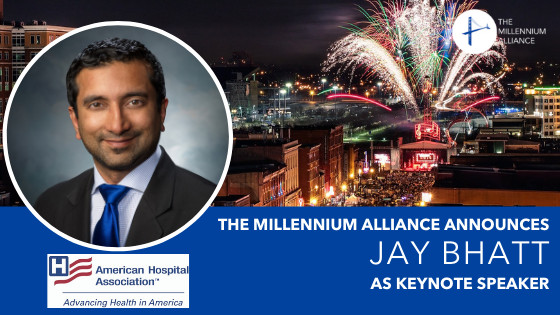
The Millennium Alliance is excited to announce Jay Bhatt, Chief Medical Officer and President, Health Research & Educational Trust at the American Hospital Association will be the Keynote Speaker at the Healthcare Providers Transformation Assembly taking place at The Hutton Hotel in Nashville, TN from May 14-15, 2019.

About Jay Bhatt:

Jay Bhatt is the senior vice president and chief medical officer of the American Hospital Association (AHA), president of HRET and serves on the executive team for the AHA Center for Health Innovation. Most recently, he was the first chief health officer at the Illinois Health & Hospital Association. In this role, he led large improvement projects including the Hospital Engagement Network (HEN), which is aimed at reducing readmissions and hospital-acquired conditions. He has launched several improvement collaboratives, managed the Medical Executive Forum, led the Midwest Alliance for Patient Safety, launched a physician leadership academy, and designed and advanced a statewide high-reliability initiative.

Previously, he was managing deputy commissioner and chief innovation officer for the Chicago Department of Public Health (CDPH). There he led the implementation of Healthy Chicago — the city’s public health agenda, innovations in cross-sector partnerships, predictive analytics, epidemiology and informatics. He led the department to be internationally and nationally recognized in their approach to using predictive analytics to improve food inspections, chronic disease, West Nile and lead inspections. He also led a groundbreaking initiative with Advocate South Asian Cardiovascular Center in developing the South Asian Healthy Eating Benefits program along with a partnership to reimagine community benefit spending with Presence Health. Under his leadership, the Chicago Department of Public Health was awarded Local Health Department of the Year, and received an award from the National Forum for Heart Disease and Stroke Prevention.

He also is a practicing internal medicine physician for Erie Family Health Center in Chicago serving vulnerable populations and is a member of the Feinberg School of Medicine at Northwestern faculty and the University of Michigan Medical School faculty. He graduated from the University of Chicago in 1999 with a degree in economics. In 2008, Dr. Bhatt received both his medical degree from the Philadelphia College of Osteopathic Medicine, and his Master in Public Health degree from the University of Illinois at Chicago School of Public Health. In 2012, he received his Master’s in Public Administration from the Harvard Kennedy School of Government as a Zuckerman Leadership Fellow and Mongan Commonwealth Fund/Harvard Minority Health Policy Fellow. He was a White House Fellows National Finalist in 2013. He is an American College of Physicians Walter McDonald Young Physician Awardee, 40 under 40 health innovator award recognition, and selected to the prestigious Presidential Leadership Scholars Program in 2016. He enjoys exploring Chicago with family and friends including trying different restaurants. He also enjoys teaching dance in the community.


About The Healthcare Providers Transformation Assembly: HCT Banner_v1

Join leaders from North America’s leading Health Systems to discuss the latest technology, innovations, and strategies driving healthcare’s transformation.

At the 9th edition of Healthcare Providers Transformation Assembly, we’ll be discussing the latest digital technology and business strategies driving healthcare’s digital transformation.

Interested in Attending? Enquire here!

Interested in Being a Sponsor? Enquire here! 

Bots Look to Break the Internet

Last year, we saw the largest DDoS attacks ever seen to record-breaking numbers of data breaches to the implementation of the GDPR, making 2018 an unforgettable year for cybersecurity.

With hackers developing increasingly sophisticated ways to attack enterprises every day, it is important for organizations to stay one step ahead of potential cyber-crimes. Thanks to the Internet of Things, the ability for bots to cause havoc at a global level has increased significantly since last year. As technology continues to evolve, it has been accompanied by smarter, more malicious and much harder to detect risks and threats. With the ever-increasing intelligence of bots, the increasing complexity of clouds and the IoT space, cybersecurity will be dominating meeting room and boardroom conversations.

Who run the world? Bots!

Organizations will definitely be seeing an increase in cyberattacks, but what will they entail? Most believe this year is the year of attacks launched by botnets aka “low and slow” attacks that aim to remain under the radar for as long as possible and to steal as much data as possible.

To protect themselves, businesses will need to adopt bot management solutions, which identify, categorize and respond to different bot types. The technology uses behavior-based bot detection and continuous threat analysis to distinguish people from bots.

Replacing cybersecurity with cyber resilience

Smart and efficient organizations will stop thinking of cyber security as a separate function of the IT department, and instead adopt it as a posture throughout the entire business. The concept of cyber resilience brings the areas of information security, business continuity and resilience together, which ultimately allows organizations, big or small, focus on their ability to continuously deliver business operations in spite of any cyber-attacks or incidents.

As more sophisticated bots become more capable of accurately mimicking human behavior online, it will make it harder for bot solutions to detect and block their activities. Effective bot management tools are crucial for addressing this threat, which is where the mindset of cyber resilience is especially crucial. That being said, concerns around cybercriminals and threats from bots discovering innovative ways to attack organizations will and should be a forefront of every cybersecurity executive’s mind as we progress in the era of digital transformation.

All in all, cybersecurity executives will need to do more to ensure cybersecurity is communicated from the boardroom to the rest of the organization, helping staff understand the threats they face in the ever-evolving technology landscape.

ABOUT THE TRANSFORMATIONAL FSI CISO ASSEMBLY

Financial Services CISO Banner

The Millennium Alliance is thrilled to present our bi-annual Transformational CISO Assembly, taking place in Nashville, TN.

With the instances of cyber attacks increasing, businesses of all sizes are working tirelessly to secure their networks, devices, and data. Fortune 500 organizations are especially vulnerable as they have big data pools and thousands of people who need access. CISOs need to plan for worst-case scenarios, stay ahead of the latest IT Security transformation technology, and maintain their company’s information assets, all without losing sight of the corporate culture.

Are you a CISO interested in attending this event? Enquire here today to find out if you qualify for Millennium Membership >>

IT Ops Reporting Is Broken & Big Panda Is Here To Fix It

Our sponsor Big Panda, is your solution when it comes to detecting and resolving IT incidents that happen so frequently in major cooperations.

This technology company offers “intelligent automation for IT incident management.” In other words, Big Panda helps major cooperations understand and manage IT Ops and NOC teams using a sophisticated management system.

“Powered by Open Box Machine Learning, BigPanda correlates IT noise into insights, automates incident management, and unifies fragmented IT operations.” According to Big Panda.

Is IT Ops Reporting Broken?

According to Big Panda’s latest whitepaper, IT Ops reporting is broken. Because of this, IT execs, NOC Managers and service owners are facing major issues.

“No Metrics. Wrong Metrics. Bad Data. Bad Tools” Big Panda reports.

As businesses go under digital transformation, a ton of steps can be forgotten, as well as important information needed to be successful in such an important and powerful transition. According to Big Panda, businesses have now started to rely on “sophisticated BI and data analytics solutions to drive smarter decision-making and ongoing improvements.”

The problem?

Businesses are not transforming themselves to their full potential – in a way that allows good analytics and reporting.

Big Panda explores three major reasons why. Find out here.

The Solution:

It’s simple: Big Panda’s Unified Analytics. IT teams are finally getting the “accurate and deep IT Ops” they need in order to see improvements across the board using Big Panda’s operation as their solution.

“Conclusion: IT Organizations Need Unified Analytics. Now.” Big Panda reports.

Interested in finding out more? Download Big Panda’s latest whitepaper for all the latest insights, statistics in order to make sure your business outcomes are meeting their best ability.

ABOUT BIG PANDA: renditionDownload.png

BigPanda Autonomous Operations Platform helps overwhelmed and understaffed IT Ops and NOC teams detect, investigate, and resolve IT incidents faster and more easily than ever before.

Powered by Open Box Machine Learning, BigPanda correlates IT noise into insights, automates incident management, and unifies fragmented IT operations. Enterprises such as *United Airlines, Intuit, Turner Broadcasting, TiVo, Workday* and others use BigPanda to reduce their operating costs, improve service availability and performance, and de-risk and accelerate their digital transformation initiatives

ABOUT DIGITAL ENTERPRISE TRANSFORMATION EAST ASSEMBLY: Copy of DET_FSI

Thanks to the success of our Digital Enterprise Transformation Assembly series, in 2019 The Millennium Alliance in partnership with our Advisory Board, we are adding more events to the list! Digital Enterprise Transformation West Coast will be heading to Las Vegas in August.

This exclusive Assembly will bring industry experts and the best solution providers to our Senior Members based on the East Coast.

Are you a CIO or CTO interested in attending this event? Enquire here today to find out if you qualify for Millennium Membership >>


Interview with Ted Wright, CEO of Fizz

As we get closer to our Transformational CMO Assembly from April 17-18 in Nashville, TN, I reflect on my recent sit down with Ted Wright at our 2018 Transformational CMO Assembly. Ted is the CEO of Fizz and author of Fizz: Harness the Power of Word of Mouth Marketing to Drive Brand Growth. 

We continue to learn from Ted and his amazing team at Fizz. Ted has so much passion for how marketers, consumers, and brands can truly benefit from Word of Mouth Marketing. Ted has been at the forefront of Word of Mouth Marketing since he helped re-ignite the Pabst Blue Ribbon brand in 2000. Over the last decade, his agency has become a global leader in Word of Mouth Marketing with clients on every continent. Ted is a humble, sincere and inspirational speaker, all of which makes Ted such a fantastic leader in the marketing world.

Thanks to Ted for being a fantastic leader in the marketing world and inspiring marketing leaders.

Check out the full interview with Ted here.

[youtube https://www.youtube.com/watch?v=8LhfAHprjC0]

About The Transformational CMO Assembly

CMO9 Banner

The digital revolution has forever changed the balance of power between individual consumers and brands. This need to think “customer first” has made the marketing function more vital than ever before.

C-Level executives around the world are anticipating that digital technology will continue to drive business. We’ve put together a series of executive education roundtables, keynote presentations, collaborative think tanks, educational workshops, and networking sessions with our industry experts and Advisory Board for The Transformational CMO Assembly.

Are you a CMO interested in attending this event? Enquire here today to find out if you qualify for Millennium Membership >>

Paging Dr. AI: AI Computers Showing Promise in Assisting Diagnoses, Study Reveals

Every year, every month, and every day, millions of patients across the United States leave the doctors office with a misdiagnoses. When doctors explore other alternatives, they tend to overlook other options, or in worst cases, be influenced by medical bias.

Not surprisingly, AI is changing that equation. In a journal paper published on February 11th, doctors in the United States and China have determined that artificial intelligence (AI)-based methods have emerged as powerful tools to transform the delivery and execution of medical care. Notably, the scientists reported that they had built a system that automatically diagnoses common childhood conditions after processing symptoms, patient history, lab results and other clinical data, providing 360 clinical decision support in cases of diagnostic uncertainty.

With the help of AI, doctors now have the tools to make faster, more accurate diagnoses that ultimately help them to predict problems before they evolve into complex emergencies. In addition, AI permits doctors to acquire detailed information about patients between visits, so they know just what to do during appointments, without wasting precious face time patients seek after.

In the study, researchers declared that the system utilizing AI was highly accurate, and that it might one day assist doctors and physicians alike in diagnosing complex or rare conditions – a big step forward in the complex medical field.

“Although this impact may be most evident in areas where healthcare providers are in relative shortage, the benefits of such an AI system are likely to be universal.”

Healthcare’s data-heavy nature makes it an ideal candidate for the application of AI across multiple disciplines, from the need for accurate diagnosis and pathology to drug research and epidemiology. Concurrently, the sensitivity of medical data raises highly fundamental questions around privacy and security. This comparison makes healthcare one of AI’s most exciting frontiers and, maybe, potentially one of its most dangerous for healthcare professionals.

Although, there are issues will need to be explored, as AI-enabled tools take a more prominent place in our health systems. In most areas of medicine, if not all areas, the future likely will take the form of a partnership between the old and the new, humans and machines ,  with doctors informing their judgment on the basis of improved diagnostic analysis, without alienating patients in the process – a bright outlook in the rapidly evolving healthcare landscape.

ABOUT THE DIGITAL HEALTHCARE TRANSFORMATION ASSEMBLY

cdoh5 banner

The future of healthcare is digital. With the FDA providing clarity with the launch of new regulations regarding digital technology in 2018, developers and healthcare industry stakeholders alike are working to transform the patient experience.

The healthcare landscape is changing. The on-demand patient increasingly favors digital technology and platforms. According to Pew Research, a third of Americans have gone online and searched symptoms, in an attempt to diagnose a medical condition.

The US healthcare industry is unique, as it markets direct-to-consumer or direct-to-patient. Digital marketing technology is enabling healthcare marketers to talk directly to consumers in a new, more engaging way.

The Millennium Alliance is pleased to announce our bi-annual Digital Healthcare Transformation Assembly will be taking place June 11-12, 2019.

Are you a Digital Healthcare executive interested in attending this event? Enquire here today to find out if you qualify for Millennium Membership >>