Are Visual Components The Future Of E-Commerce?

The retail industry is exploring new digital components more than ever, as digital transformation continues to make a large impact in how retailers conduct strategies, reach customers and create engaging in-store and online experiences.

Visual components are among the tools that retailers are beginning to explore. This comes as no surprise, considering social media has made such a large impact on consumers and relies so heavily on visual aids.

“As consumers have become more comfortable with images, and technology better at interpreting them, images have become more central in e-commerce,” said eMarketer analyst Yory Wurmser, author of a new report on the subject.” Emarketer reports.

Why Do Consumers Like Visual Aids?

The reasons consumers appreciate visual aids during the shopping experience relates to the fact that it creates a more personalized experience for shoppers, which is one of the main priorities while making decisions about brands.

Visual commerce has proven to be valuable for retailers while targeting an audience.

“Most consumers prefer to see at least a couple images of a product before buying it, according to Salsify’s September 2016 survey of US digital buyers. Nearly three in five respondents said they prefer to see three to four images, and only 1% said they prefer not to see any photos.” Emarketer reports. 

We have seen visual searches appear in many different e-commerce sites, like Amazon, Pinterest, and Wayfair, which have proven to be successful. Now, eBay is rolling out new features on its site that involves visual components.

The two visual search tools that eBay will be launching allows online shoppers to incorporate photos found through Snapchat, their camera roll, the web or any social networking site. The customers can use those photos in order to search, and match, the products found on eBay. This creates a whole new shopping experience for the customer, allowing them to engage and reach personalized levels of buying.

eBay will now be in charge of matching items that appear to be a match for the customer, depending on the listings that are offered in their catalog. Not only does this create a personalized shopping experience, it allows for a quick search and transaction experience.

In order for this to work, eBay will use digital transformation tools found through artificial intelligence like deep learning and computer vision, using a deep learning model in order to process the images.

“eBay is at a technological advantage due to the rich set of user-generated images and item data we’ve accumulated through the years,” Mohan Patt, VP of eBay’s Buyer Experience, said in July. “By applying machine learning technology, eBay can deliver a fast and reliable shopping experience backed by one of the world’s largest commerce data sets,” TechCrunch reports.

The Future Of Retail

These new features prove that the retail industry is moving towards digital components in order to create the ultimate customer experience for consumers. It allows for customers to match their wants to reality, which could result in positive feedback among eBay’s audience. (We will keep you updated on the feedback these features receive.) 

So, we propose a question: are visual components the future of retail? Well, if you were to answer from eBay’s point of view, the answer would be yes. Combining different levels of technology to create a seamless customer experience involving visual recognition and images, can be the step in the direction of the future.

Until then, we will have to sit back and try out the features for ourselves.

ABOUT DIGITAL RETAIL TRANSFORMATION

C-Level experts from across North America’s retail industry are coming together inCMOEC1 Updated Banner.png Dallas in August to anticipate the highly complex digital retail environment that will develop over the next few years.

Through a cutting-edge program designed by the industry, for the industry, we will provide a fresh and up-to-date insight to help move your organization to the next level of digital leadership. A series of executive education roundtables, keynote presentations, collaborative think tanks, educational workshops, and networking sessions will offer industry-specific topics and trends to ensure your company sustains its competitive advantage.

Are you a Retail executive interested in attending this event? Inquire here today to find out if you qualify for Millennium Membership >>
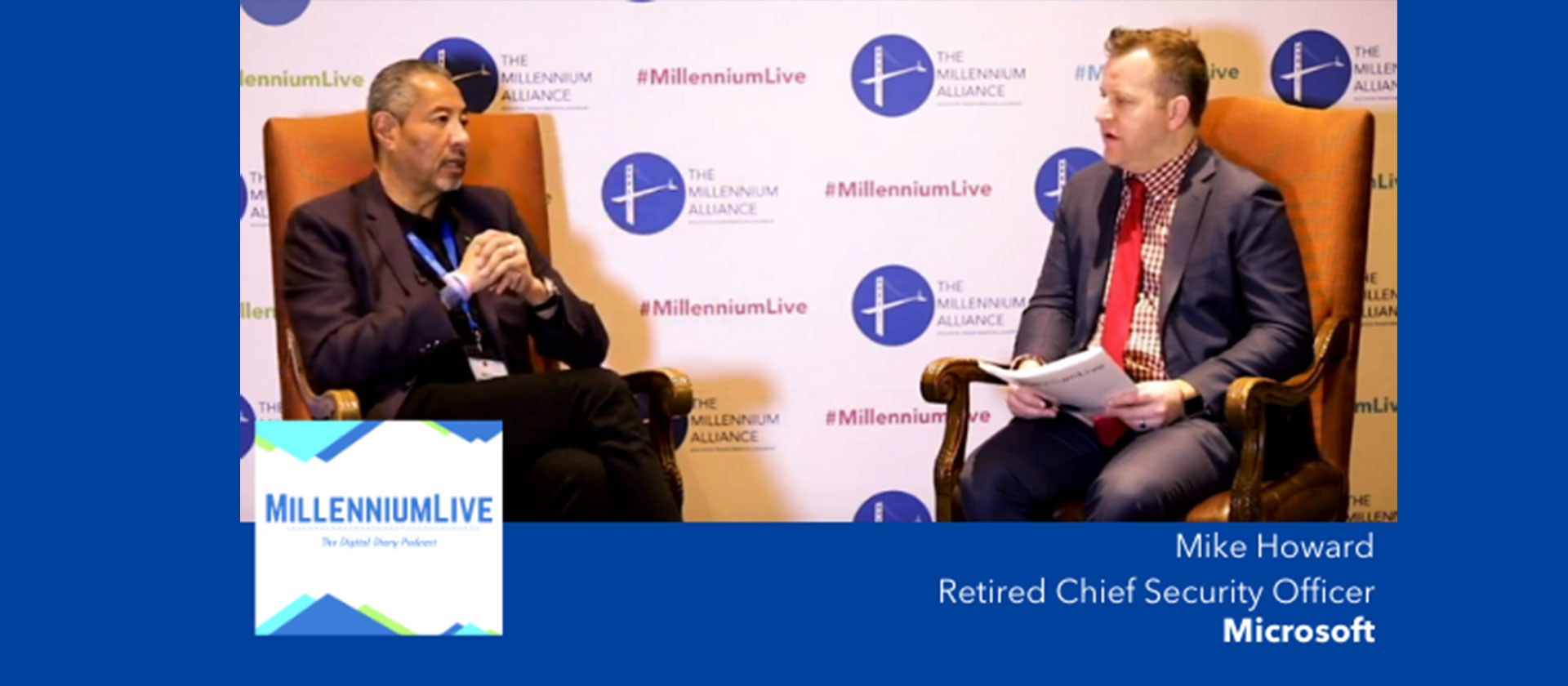
Interview with Maggie Chan Jones, Former Global CMO of SAP and Founder & CEO of Tenshey, Inc.

In anticipation of our upcoming Transformational CMO Assembly, we had the chance to hear from our Gala Dinner Keynote Speaker, Maggie Chan Jones, on her newest venture, Tenshey, Inc., as well as her thoughts on where the marketing industry is heading and how C-Suite Executives should be approaching diversity. Read on!


Millennium Alliance: In your time at SAP, you led global advertising and brand experience campaigns and truly transformed the SAP brand. How did you build a strong brand identity that is consistent on a global scale but also targeted?

Maggie Chan Jones: A strong brand begins with its purpose – the problems the brand solves and for whom – and how its existence helps to create a better world. Having spent my entire career in the tech industry, I love what technologies can do to make our lives better.

When launching a global campaign, your employees and stakeholders are your best brand ambassadors. First, creating the awareness and evangelism inside the organization will carry a multiplier effect when the campaign is launched externally. To gain global consistency that is effective, do not just replicate what you created in your home country, but “trans-create” (translate and recreate) the campaign by infusing it with local cultures and languages. Contextual experience is important to driving engagement with local audiences.

How did your experience at SAP help to build your current venture, Tenshey, Inc.?

As a C-suite exec in the tech industry and an executive sponsor for diversity and inclusion, I realized that my ascension into the C-Suite as a woman of color was rare and it should not be rare. Women continue to remain underrepresented in the C-Suite. According to the McKinsey and Leanin.org study, only 19% of the C-suite in corporate America are women and an even fewer 4% are women of color. I want to change that.

I always say that career growth is a team sport. Your own hard work isn’t going to be enough. You need a strong support system both personally and professionally. One of the best kept secrets for leadership development and acceleration is executive coaching. I have benefited from it through the sponsorships of my employers from Microsoft to Level 3 and SAP. I started working with my executive coach in 2011 when I was a Director of Marketing at Microsoft. Working with a coach early in my career enabled me to have clarity about my career roadmap, accountability for my steps toward reaching my career north star, and most importantly, a trusted advisor who’s always in my corner through my leadership growth. I wish more leaders, especially women, can have the same opportunity that I had – to work with an executive coach early in their careers.

In November 2017, I founded Tenshey, Inc., a tech-enabled startup with a mission to advance gender diversity through Executive Coaching. We match leaders, primarily women, from their early professional years to CEOs, with certified executive coaches who can help them achieve their professional goals.

Tenshey is all about advancing gender diversity and leadership development. How should C-Suite Executives be approaching diversity and inclusion to empower and enable their organization?

I recommend three actions C-suite executives should take to create a diverse and inclusive organization. First, they must lead by example with actions when it comes to approaching diversity and inclusion, beginning with their own leadership teams. Studies have shown that a more diverse team drives better results, so it just makes business sense.

Second, diversity means “getting invited to the party,” whereas inclusion means “getting invited to dance.” You may have a good mix of diversity across gender, race, age, experience and thoughts, but do they all feel their voices are being heard? Being inclusive will truly unleash the potential of the organization.

Third, place accountability across the organization, not just at the top of the company. 4 out of 5 CEOs have declared gender diversity as a priority, yet the pipeline to the top continues to shrink at every level. To gain traction, there needs to be clear accountability for diversity and inclusion just like accountability for our business priorities.

During this digital revolution, what strategies can CMOs be using to stay on top?

The digital revolution allows CMOs to supercharge creativity with data-driven decision making, further integrating the art and science of marketing in the quest to deliver a delightful customer experience. Technologies such as Virtual Reality (VR) and Augmented Reality (AR) takes experiential marketing to a new level, while big data and artificial intelligence significantly increase our ability to predict and understand what customers may want to experience or buy next.

During this digital revolution, marketers will require data-driven skill sets combined with the ability to tell stories in artful and compelling ways. It is important to understand the point at which art meets commerce to create marketing experiences that are both personally and commercially appealing.

We are really excited you will be joining us at our upcoming Transformational CMO Assembly as Keynote Speaker. What do you think are the benefits for C-Suite Executives to attend small, intimate programs such as ours at The Millennium Alliance?

CMOs are constantly running at hundreds of miles per hour to drive growth for their companies. But it is so important to take a pause to meet with your industry peers, both as a way to learn from and to support one another. The intimacy of an event like The Transformational CMO Assembly allows leaders a safe space to exchange some of the toughest challenges that they face and to discuss best practices. I am honored to be invited as your Keynote Speaker, and I am excited about how this collective force can impact the industry positively.

About The Transformational CMO AssemblyCMO9 Updat Banner (1)

The digital revolution has forever changed the balance of power between individual consumers and brands. This need to think “customer first” has made the marketing function more vital than ever before.

C-Level executives around the world are anticipating that digital technology will continue to drive business. We’ve put together The Transformational CMO Assembly – a series of executive education roundtables, keynote presentations, collaborative think tanks, educational workshops, and networking sessions with our industry experts and advisory board.

Are you a CMO interested in attending this event? Inquire here today to find out if you qualify for Millennium Membership >>
 

What Are The Habits Of Successful Professionals On Twitter?

In a recent blog post, we explored the reasons why executives should engage on Twitter. Long story short, it is a platform that successfully connects users and delivers the desired brand message to an audience. If you have a Twitter, then you have taken the first step to having exposure in the social media world. Congrats!

“Over the past several years, business executives have taken to Twitter to stay connected with employees and customers – and the best of them have been able to leverage the platform to great effect.” Social Media Today reports. 

Now, if you have a Twitter but you are unsure of where to begin, don’t worry. There are a few habits that you can create that will result in success on this platform, and other social platforms as well.

Ditch The Formality

As a business professional, it is probably a habit of yours to portray professional formality in everything you do. When this is obviously important and effective, on social media, you can ditch this tone of voice to a certain extent. Twitter is meant for people to share thoughts and ideas, and to relate with one another. If your tone is completely formal and structured, you may lose an audience.

“And by positioning the CEO or leader of a business as a trusted individual, as opposed to a faceless corporate entity, clients will be more likely to connect emotionally, as well as rationally, with the brand.” Social Media Today reports. 

You can use Twitter to share your unique voice and to show your followers who you really are. If you are deciding to share personal opinions, and those opinions are not meant to represent your brand, make sure you convey to your followers that these opinions are simply your own and do not belong to your company. You can do so in an informal voice, which will engage followers.

Connect With The Right Followers

If you are on Twitter to network or simply engage with other executives, make sure you follow people who will offer you the most benefit, such as new ideas, different perspectives or news surrounding your industry. You can find these people by following hashtags that match your industry, mindset or goals.

Once you find the proper people to connect with, you can then hit that nice follow button, and like magic, you are connected. Then, you can reach out to them by liking, retweeting, or messaging them. Go crazy if you want, but not too crazy, because that can get annoying.

Once you accomplish this goal, you will create engagement with those who you are connected to, which is always a good thing.

“Twitter isn’t a platform for selling a brand, necessarily, but it’s great for creating a network of interested individuals who can support the brand through loyalty. ANd that loyalty is fostered through listening, response and regular engagement.”  Social Media Today reports. 

Be Careful What You Share

Speaking of engagement, it is important to be aware of everything you like and share. Remember, what you share and like will be on your profile, which is what your followers will see. What you want to portray to the world will be seen through these actions, so always be cautious and aware.

That being said, Twitter is an easy concept to get the hang of, once you form some habits and keep certain things in mind. Happy tweeting!

ABOUT TRANSFORMATIONAL CMO

The digital revolution has forever changed the balance of power between individual CMO9 Updat Banner (1).pngconsumers and brands. This need to think “customer first” has made the marketing function more vital than ever before.

C-Level executives around the world are anticipating that digital technology will continue to drive business. We’ve put together a series of executive education roundtables, keynote presentations, collaborative think tanks, educational workshops, and networking sessions with our industry experts and advisory board.

Are you a CMO interested in attending this event? Inquire here today to find out if you qualify for Millennium Membership >>


Convey Health Solutions Focuses On Monitoring Innovations In Healthcare And Beyond

With our Healthcare Payers Transformation Assembly rapidly approaching, Digital Diary sat down with Convey Health to gain insight into the healthcare world, especially how technology is changing the relationship between healthcare partnerships, as well as what the future holds for Convey.

Thanks, Convey for sharing such valuable information!

With constantly changing and evolving regulations in healthcare, how are you preparing yourself to navigate the uncertain future of health policy and changes government-sponsored health plans?

Since the inception of our organization, we have maintained a relatively extensive Compliance and Quality organization, led by our Chief Compliance Officer, which is responsible for the continuous monitoring of State and Federal healthcare regulations.  Through the years, we have continuously evolved this process into a best practice so that as the regulations are generated our team at Convey immediately begins the process of interpretation, then incorporating into our Learning & Development organization and our respective trainers and managers who are responsible for communicating these regulatory impacts associated with their day-to-day activities.  In addition, our Compliance team will provide the regulatory interpretations to our IT organization in order to assess our technology and determine a course of action in order to sufficiently and successfully enable the technology to perform. Overall, Convey works closely with our subsidiary firm Gorman Health Group, a leading advisory firm that provides subject matter expertise in government programs to guide our interpretations.

How are emerging technologies, new business models and core capabilities affecting Convey, and how is this new role of digital technology impacting your relationship with your members?

Convey is focused on better serving the fast-growing Medicare population.  This population, as reported by such leading organizations as the Pew Research Center, tends to have lower rates of adoption of technology.  However, this trend has been improving year over year as the baby boomers begin to age in. As a result, Convey has begun to focus on innovations in such areas as the internet of things (IoT) to address how this population can more easily interact with health plans and their services.  One area of focus for us is on our OTC benefit administration services. We have begun developing solutions to improve the way seniors can order over-the-counter products and drugs through common devices like virtual assistant technology (e.g., Amazon Alex, Google Home, Apple HomePod, etc.).  Today, the process for ordering OTC products can occur online, by mail, or by contacting one of our call centers. However, through virtual assistant technology orders can be as simple as sitting in your favorite chair at home and telling your virtual assistant to order a certain product. The virtual assistant will confirm the order as well as providing information to the member on their available balance and status of the order.  Mashup, which combines a variety of technologies, will continue to evolve in the healthcare industry and Convey continues to monitor these innovations in order to determine the most effective approach to their use for the senior population.

Developing technology to exceed expectations is important in healthcare, especially now that we are in 2018. What do disruptive forces in IT such as A.I. you think are creating better, faster and more efficient solutions for your clients?

Convey is constantly monitoring innovative technology, such as virtual assistant technology, A.I., and blockchain to determine their applicability and effectiveness for use within and outside of Miramar, Convey’s enterprise technology platform for Medicare administrative services.  We’ve introduced Project 2020 to address incorporating some of these technologies into our solutions in order to improve the overall member experience. Improving the member experience for the Medicare population includes consideration of the practicality of the innovative technologies.  The long pole in the tent is being able to embed these technologies into our solutions without complicating the delivery of services to the health plan or the day-to-day operations of a health plan. Our health plan customers are equally driven towards understanding how solutions like what Convey provides will help with their ability to serve the Medicare population, but how these innovative solutions are used won’t disrupt or complicate their operations.  As Convey embarks on Project 2020 we give equal weight to both improving the member experience and reducing the impact on the health plan’s operations.

By specializing in government health programs, what are you doing to explore new models and partnerships that focus on patient needs within Medicare and Medicaid?

At Convey, we are not looking at providing parity to solutions that already exist or are being used by our health plan clients today.  Rather, we’re evaluating where the Medicare market is trending and directionally assessing ways to better serve tomorrow’s Medicare population.  Government health programs are the most regulated and the most complex, yet serve the neediest population, who struggle with the most fundamental and basic levels of communication.  The collision of a highly complex/highly regulated industry with the most socio-economically challenged population is a problem unto itself.  Convey continues to strengthen our ability to better interact with the Medicare population on behalf of our health plan clients through purpose-built solutions and services.  Through our recent acquisition of the Gorman Health Group, we are extending our service offerings through subject matter expertise in government programs in order to ultimately improve the operational models for these health plans.  The marriage of Convey’s solutions that touch the Medicare member and Gorman Health Group, which touches the health plan we believe can bring closer together ways of strengthening the chasm between the member, health plan, and government regulations.

What are the benefits of attending an intimate C-Level event like ours?

Convey is seeking a better atmosphere in which to communicate on our solutions and services.

ABOUT HEALTHCARE PAYERS TRANSFORMATION ASSEMBLY

PAY8 Banner.png

The Millennium Alliance is pleased to announce that application for the Healthcare Payers Transformation Assembly is now open. North America’s most prominent IT and business leaders from the Healthcare Insurance industry will be gathering to discuss how to adapt to the industry’s customer-centric makeover.

Download the Sponsorship Prospectus to see if your eligible to sponsor our event >>


“It’s Hard To Believe How Far Millennium Has Come in Just Five Short Years” – The Millennium Alliance Turns 5 Today!

As a company, we work together to achieve success in everything we do. Our unique culture encourages everybody to collaborate, share motivation and strive towards greatness. We celebrate milestones and achievements together, and today, we are celebrating a very important birthday.

We Are 5 Years Old!

Five great years have come and gone, which has inspired us to reflect on the great attributes The Millennium Alliance offers all of us, regardless of job title or position. Because, when push comes to shove, we are all a team.

I asked a few members of The Millennium Alliance team to share their thoughts on our great company and what they are most looking forward to while looking towards the future.

“My favorite thing about Millennium is the opportunity to grow. The consistent sales trainings, and support from leadership allows for as much career growth as you set your mind to. It’s a good feeling to be always learning!
As we turn 5 years old, I’m most excited about welcoming some new faces onto our teams!” – Gabie Polce, Director of Strategic Partnerships 
“The office camaraderie is my favorite part of our company! I am most excited to grow as a company and the new locations we will be using for some of our Assemblies!” – Erin Mccabe, VP of Client Services
“It sounds cliche but it’s the people, our team is fantastic and always striving to innovate and provide the best experience and engagement for our members. The people we all get to work with on a daily basis is amazing, the level of executives, world-renowned business leaders and industry heavyweights are incredible.  I literally pinch myself many times a week that I get to engage and work with the very best business leaders and they value what we do. The growth of the company has been amazing to be part of the past 4 years and I can’t wait to see what we accomplish in 2019 and beyond. The increased engagement of our Advisory Board is really exciting as well as the tremendous opportunities our content team are creating with our video interview series and our podcast. Adding new events and opening new markets is going to be amazing as we continue to provide more services to truly become the one stop shop for C-Suite executives.” – Nick Peacock-Smith, Founder & Chairman – The Millennium Alliance Advisory Board & Director Strategic Partnerships
“There are so many great things about Millennium, but the incredible people here is what truly stands out to me the most and makes it such a special place. Creativity is encouraged, hard work is rewarded, and plenty of fun is had each day in our office full of so many unique and talented individuals. I’m particularly excited for the tremendous amount of growth that we still have ahead of us. It’s hard to believe how far Millennium has come in just five short years, and five years from now, I anticipate that we’ll be looking back and shaking our heads in disbelief about how many major milestones we’ll have accomplished as a company between now and then.” – Greg Dicso, VP of Marketing

Happy Birthday, Millennium! I can’t wait for what is to come.

ABOUT THE MILLENNIUM ALLIANCE cropped-new-logo-500x500-11.png

Headquartered in Midtown Manhattan, The Millennium Alliance is a leading technology, business, and educational advisory firm. Focusing primarily in areas such as business transformation, executive education, growth, policy, and need analysis. Millennium is quickly becoming one of the most dynamic locations for collaboration across the world.

Millennium Membership offers Fortune 1000 C-Level executives, leading public sector/government officials, and thought leaders across a variety of disciplines unique and exclusive opportunities to meet their peers, understand industry developments, and receive introductions to new technology and service advancements to help grow their career and overall company value.

The 3 Pillars of The Millennium Alliance:

Education: Offering business leaders high-level learning opportunities as we believe no matter what level you are in business, you should never stop learning.

Transformation: Business transformation is powered by technology. We actively seek out the smartest technology, match the technology to our members based on our needs analysis framework and facilitate introductions.

Leadership: No business transformation is possible without People. As a leader, you are tasked with building and developing your team and your business at large. Millennium Membership is made up of the best leaders from across North America. By working with us, you get to network with and learn from business’ best.

CIOs Reveal Rapid Growth In Technology Makes It Hard To Adapt

A recent article released by CIO Dive revealed that CIOs are having a hard time keeping up with the complexity of technology. The report was taken from a digital performance management company called Dynatrace, where 800 CIOs were surveyed globally.

The fact that technology is growing so rapidly has been a cause of concern among professionals, particularly CIOs, who claim that the complexity of technology makes the management of digital performance more difficult. As we know, managing digital performance is very important when it comes to enterprises and business operations.

“The rapid adoption of new technologies has driven this trend to where it is now and it will likely accelerate in the next 12 months, when 53% of CIOs plan to deploy even more technologies. As a result of this complexity, IT teams now spend an average of 29% of their time dealing with digital performance problems.” CIO Dive reports. 

Technology Is Becoming More Complex

It is really no secret that technology is growing, at a rapid pace. This pace has been growing a significant amount over the years, and with the growth of technology comes more complex tools that takes a certain kind of mindset to conquer and adapt to. As a business professional, especially a professional in the security scope, it is crucial to understand how this new technology works. If not, you will fall short.

In the survey released by CIO Dive, professionals reveal a bunch of reasons why they believe technology is becoming too complex to keep up with.

“Coming challenges like multi-cloud architecture and hyper-complex IT ecosystems challenge an organization’s ability to progress beyond physical databases and third-party cloud service providers. The philosophy of “More technology is better” has reached a tipping point.” CIO Dive reports.

The report reveals that 76% of CIO think that the growing information technology is becoming too complex is bringing challenges to managing digital performance. In other words, technology is interfering with carrying out digital tasks effectively, as well as managing performance within technology.

According to the report, CIOs are planning on adopting key technologies like cloud computing, microservices, and containers. The study also focused on the fact that IT complexity is growing so much, that 53% of CIOs are looking to dive into more technology within the next year. This means that CIOs are focused heavily on the technology scope, which creates a unique sort of pressure for professionals.

CIOs revealed that just one mobile or web transaction crosses about 35 different technology systems. This number differs greatly than 22 which was only 5 years ago.

“As a result of this mounting complexity, IT teams now spend an average of 29% of their time dealing with digital performance problems; costing their employers $2.5 million annually.” Business Wire reports.

CIOs are faced with a challenge in this digitally driven world, to either adapt to the complexity or to fall behind.

ciso7 banner

ABOUT THE TRANSFORMATIONAL CISO ASSEMBLY

The Millennium Alliance is thrilled to present our bi-annual Transformational CISO Assembly, taking place in Nashville, TN.

With the instances of cyber attacks increasing, businesses of all sizes are working tirelessly to secure their networks, devices, and data. Fortune 500 organizations are especially vulnerable as they have big data pools and thousands of people who need access. CISOs need to plan for worst-case scenarios, stay ahead of the latest IT Security transformation technology, and maintain their company’s information assets, all without losing sight of the corporate culture.

Are you a CISO interested in attending this event?  Inquire here today to find out if you qualify for Millennium Membership >>

Spark Customer Experience Innovation With These Three Strategies

Most companies employ product development or operational excellence programs to drive innovation in those areas.  But what about innovation in customer experience (CX)?  If CX is a top priority for your organization – and it should be, given that leading CX companies build greater customer loyalty, make employees happier, achieve revenue gains of 5-10%, and reduce costs by 15-25%, according to McKinsey — you need to ignite innovation in CX.  CX innovation must be a deliberate, distinct, disciplined effort.

CX innovation differs from other kinds of innovation. Instead of starting with a product, service, or core technology, innovation in CX starts with the customer and her journey. Innovation that’s dedicated to CX is new to most organizations, so it won’t just happen — you have to initiate it and then develop it into an ongoing practice. Even if you know that innovation in CX is the primary way to compete and win today, you might not know how to get started. Here are three strategies to spark CX innovation:

1. Start a CX innovation lab

Similar to a product or business innovation lab within a company, a CX innovation lab is a dedicated space, process, or program in which participants focus on identifying, developing and testing new CX  ideas.  How isolated and independent the lab is from the rest of the organization and its operations can differ significantly and should be based on a company’s existing culture, the priority it places on CX innovation, and the leadership of the lab.  But in general, the objective of a CX innovation lab is to facilitate a test-and-learn approach to CX.

The innovation lab at Neiman Marcus, “iLab,” was initiated by the head of the retailer’s IT department, so he located within the IT office space a group of folks dedicated to CX innovation.  Although iLab started small with minimal investments and a grass-roots approach to securing support for its work, it operates with two clear criteria for its projects:  1., Does it solve a problem for our customer?; and 2. Does it enhance customer relationship?  Although Scott Emmons, iLab’s head says, “Not everything works. Most of the time, it won’t,” the objective is to learn and make innovation a core value at the company.

The group collects ideas from sales associates, company executives who discover new possibilities while traveling, and even solution providers who lend customer insights.  Their efforts spawned a CX innovation called “Memory Mirror,” which allowed shoppers to get a 360-degree real time video as they tried on clothes to share with friends.  After it was rolled out, though, the team evolved the program as is often the case in innovation labs, and introduced it at Neiman’s beauty counters.  Now the “Memory Makeover” allows shoppers to get a video of their makeup application that they can later reference at home or next time when they are shopping.

Canadian Tire, the $12.5-billion parent company of Canadian retailers including SportChek sporting goods stores, Mark’s apparel stores, Gas+ gasoline stations, and the eponymous tire store chain, instituted a different kind of CX innovation lab.  It opened several innovation facilities across Canada, staffed by interdisciplinary teams consisting of behavioral scientists, game and virtual-reality developers, and statisticians.The initiative grew out of a partnership the company had with Communitech, a public-private business incubator.  After working with the firm as its first retail partner for a couple of years, Canadian Tire branched out on its own, although it located its first lab adjacent to Communitech’s.  With its own dedicated spaces and staffs, these labs enabled the company to attract new talent and accelerate innovation development.  One of their more ambitious projects was an interactive patio builder that relied on gaming-style 3D graphics and gave customers the option to use an Oculus VR viewfinder to design a new deck for their home.

2. Offer company-wide CX training. 

CX is a multidisciplinary effort which impacts and involves all functions of a company.  As such, you need to cultivate a CX mindset and skill set throughout your organization.While the marketing and digital teams might require advanced, in-depth training on developing and applying customer insights or working with certain data or platforms, everyone in your organization should at least be exposed to the basics of CX. Everyone needs to know in their heads who your customers are and what their needs and journeys are; they need to be motivated in their hearts to adopt new ways of doing and thinking; and they need to be empowered with their hands and feet to implement new CX programs and work together to support your desired CX. Company-wide training, like the CX Bootcamp that audio technology company Bose Corporation developed, is an effective way to develop the attitudes and behaviors needed for CX innovation.  The CX Bootcamp was created to socialize insights about Bose customers throughout the company and ground the entire organization in the needs of its customers.  Groups of 50 to 100 Bose employees, from store managers to executive leaders, participated in the multi-day workshops.  The Bootcamp was organized into five training modules aligned to behaviors such as empathy and openness, and introduced a common vocabulary and standard frameworks that people could draw upon to work together on CX after the training.UK mobile provider O2 has also used company-wide CX training to advance its CX innovations.  To support its strategy of “Customer Led, Mobile First” and to ensure a discipline of customer insight throughout the organization, it rolled out a training program focused on learning a single definition of “customer-led” and understanding the company’s CX principles.  Whether customer-facing or not, employees were trained on the principles so they could develop customer data-driven insights and plans going forward.

3. Enroll everyone in solving CX problems.

Although it makes sense for a single department or group to spearhead CX design and development, you can also benefit from democratizing the effort.  Not only can people throughout your organization contribute different customer perspectives from their different backgrounds and exposure to customers, they also can contribute a breadth of ideas on what’s possible to meet customers’ needs.  You should develop a formal system for encouraging and capturing these inputs. MultiChoice, a South Africa-based satellite TV service, did just that with its #ninetynine campaign.  Based on the belief that employees, who already know how important CX is because they are customers themselves, are competent and passionate and want opportunities to solve CX problems, the company started a program in which it published on its intranet 99 customer problems and invited anyone in the organization to suggest solutions.  Executives then screened the proposed innovations and decided whether or not to fund their development.For example, one employee who was hard of hearing suggested adding a subtitles icon indicator into the “info” menu – a small, but significant improvement for a segment of customers.  Another employee, who had previously identified a solution for transferring content to new devices, participated in the program to elevate the visibility of his proposal and secure the funding to implement it.Although the company didn’t offer any reward or incentive for participating at first, employees jumped on the chance to contribute to customers’ and the company’s success.  Eventually as early participants got recognized for their contributions, more and more employees wanted to participate.  Clint Payne, MultiChoice’s CX manager, explained the success of the program by saying that, instead of you getting in the way, “employees already know the solutions,” so you only need to give them permission to fix customers’ problems.  He said the campaign got employees “out of their comfort zones” and contributed to improved customer results. Kirsty Traill, VP Customer at Hootsuite, pointed to additional benefits of enrolling all employees in CX innovation.  “To encourage and instill a strong sense of ownership for CX improvements and democratize CX decision making across all levels of the organization,” was one of the reasons her company instituted its “Owl2Owl” program. Owl2Owl is a peer mentoring program in which employees are matched together not only to learn career advice from each other, but also they are assigned a customer pain point and asked to develop a solution for it.  Then each pair has the opportunity to present their innovation to the company’s executive leadership and the top impact proposals are implemented.  As a result of engaging employees throughout the company, Hootsuite has identified innovations such as a new content analysis tool and a refresh to the way it calculates its customer health score.


Originally posted on Forbes. Denise Lee Yohn is a brand leadership expert, speaker, and author of What Great Brands Do and FUSION: How Integrating Brand and Culture Powers the World’s Greatest Companies. Denise sits on The Millennium Alliance Advisory Board.

Keith Reinhard, DDB Worldwide Chairman Emeritus, to Keynote Upcoming Transformational CMO East Assembly

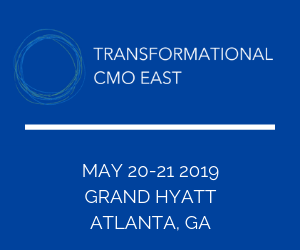
The Millennium Alliance is thrilled to announce Keith Reinhard, Chairman Emeritus, DDB Worldwide as Keynote Speaker at The Transformational CMO East Assembly taking place on May 20-21, 2019 at The Grand Hyatt Atlanta, GA.

About Keith Reinhard:

Keith Reinhard is Chairman Emeritus of DDB Worldwide. He is one of the
few agency heads to rise through the creative side of the business. As a
working creative man, he is most remembered for “You Deserve a Break
Today”, his transformational campaign for McDonald’s which was named
best jingle of the 20th Century and for “Just Like a Good Neighbor, State
Farm is There.” Under his leadership as Chairman and CEO, DDB
Worldwide, with 200 offices in 96 countries, became one of the largest and
most awarded advertising agency networks in the world. A member of the
Advertising Hall of Fame, Keith has been referred to as the industry’s “soft-
spoken visionary” by Advertising Age, which in 1999 named him one of the
100 most influential figures in the history of advertising. Keith is the author
of Any Wednesday, a collection of notes on advertising and life and was
recently featured on “The Story of Cool,” LL Cool J’s documentary series
on MSNBC.

About The Transformational CMO East AssemblyCopy of Healthcare Payers Banner_v3

Digital marketing is a fast, dynamic landscape and for marketers to keep ahead of their competition, boosting brand awareness and sales they need to keep up to date with current trends, technologies, and strategies. Differentiating yourself and maintaining trust in the ever-changing marketing world seems to be getting easier, but only to those who are willing to adapt to the rapid-fire marketing. The more you can plan ahead, the better equipped you as an executive will feel in managing those changes when they happen.

In May of 2019, the Transformational CMO East Assembly is a unique event that challenges our attendees to learn how to anticipate what’s next for the highly complex marketing environment that has emerged throughout the year through a series of executive education roundtables, keynote presentations, collaborative and educational workshops, and networking sessions with leading industry experts and our coveted advisory board over the course of 2 days.

You can say this is one of the most exclusive events of 2019, and spaces are reserved for the best in the business. If you’re a CMO looking to stay one step ahead of the digital world, reserve your seat today >

Are you a CMO interested in attending this event? Enquire here today to find out if you qualify for Millennium Membership >>

Download your copy of the sponsorship prospectus to see if you are eligible to sponsor this event >>


Mobile First, Mobile Matters!

Back in the day, mobile was solely just a means of communication. Now, they are a part of everyday life. The need for smartphones and smart applications has become a central part of every person’s life, as mobile phones are now used for networking, gaming, getting directions, tracking health, shopping, and more.

The cumulative progress of mobile technology, the availability and access to high-speed internet and the remarkable communicative interface in these devices results into a whole level of new and innovative experience mobile computing.

“The reliance and heavy usage of mobile phones creates a huge opportunity for brands to create and curate mobile-first customer experiences,” said Bridgette Darling, product marketing manager at Adobe. “If your business sells a product, a mobile presence that the customer can engage with is key. So is the need to do it right, stand out, and make them remember the experience.”

Now these mobile apps have become an integral part of our lives and we rely on them in more than one way.

Mobile Apps

Most, if not all, mobile devices are being used for personal activities via mobile apps, email, web browsers, texts, and calls, and much more. Mobile can no longer simply be defined solely as a channel, but an extension of the consumer as more consumers depend on their phones to get things done.

With the use of mobile apps, brands can figure out how to enhance their customer’s experiences all while creating an app that is compelling, useful, and looks to beat out their competitors. That being said, now that people have made it clear that mobile is the preferred method for shopping, business, daily-related activities, it is vital for brands to become hyper-aware of the importance mobile has in on their future success.

The Opportunity for Mobile Devices and Mobile Moments

Are micro-moments the new frontier in mobile? All signs point to YES. Customers, especially when using their mobile devices, do not want drawn-out processes that require a long series of actions – Frankly, they do not want to spend the time waiting for results, whether that be accessing the app, receiving a product they ordered, downloading a coupon, and everything in between. Every moment that elapses is one in which you risk losing the opportunity to get a new or recurring customer.

With mobile moments looking to increasingly dominate the worlds of communication and marketing, brands will have to engage with their audience and have to recognize that they have less and less time to convince them to choose your brand – and this all starts with realizing the immense potential of mobile technology.

About the Transformational CMO Assembly

The digital revolution has forever changed the balance of power between CMO9 Bannerindividual consumers and brands. This need to think “customer first” has made the marketing function more vital than ever before.

C-Level executives around the world are anticipating that digital technology will continue to drive business. We’ve put together a series of executive education roundtables, keynote presentations, collaborative think tanks, educational workshops, and networking sessions with our industry experts and advisory board.

Are you a CMO interested in attending this event? Enquire here today to find out if you qualify for Millennium Membership >>

Download your copy of the sponsorship prospectus to see if you are eligible to sponsor this event >>