“Retailers need to be obsessed with closing customer experience gaps” Skava CEO, Arish Ali, Shares His Perspective On Retail

We are excited and anticipating our upcoming Digital Retail and Marketing Transformation Assemblies taking place at The Fairmont Dallas in Dallas, TX on February 4-5th, 2019. In August before our the summer edition of the Digital Retail and Marketing Transformation Assemblies, we sat down with Arish Ali, Co-founder, and CEO of Skava to gain a first-hand look and perspective on the retail industry as it is today.

Thanks, Arish!


What do you believe are the new priorities of retailers in the “new generation of modern commerce?”

Retailers need to be obsessed with closing customer experience gaps. Consistent experiences in-store and online, omnichannel customer support, fast loading websites and apps, products in-stock and fast and free shipping are what customers care about. These “new” priorities are of course old priorities — but many retailers still struggle to satisfy the basics.

Retailers also need to be obsessed with new customer acquisition. Customer loyalty in a world with instant access to unlimited choice and heavy competition won’t keep a retailer alive without a steady stream of new customers at all times. Continual testing and optimization of customer acquisition tactics, from SEO and paid search to co-marketing, social and influencer marketing, affiliate and content marketing is vital and must be carefully balanced against discount strategies.

Skava started in 2002 as a mobile apps company and has evolved ever since. What has been the most exciting part of the journey?

Working with our customers on their mobile commerce applications in the early 2000s, we saw that time and again customers were simplifying their requirements to meet limitations of their monolithic legacy platforms.  We understood early on that by applying our architecture expertise in microservices to the commerce platform space we would have an outsized impact on our customers’ success. We spent the time and money to build the most flexible and modular commerce system on the market, Skava Commerce, and it has been a game changer for our clients.

How important is it for retailers to adapt to the modern age we live in today, especially being flexible when it comes to e-commerce?

Customers have so many options of where to shop online.  What we feel will separate the winners from the losers is their ability to move rapidly to satisfy changing customers needs. The flexibility to build, test and deploy innovative features while still maintaining day-to-day store operations is at the core of what we offer at Skava – a microservices based platform that is designed to encourage evolution and experimentation to keep your store fresh and engaging.

Where do you see the retail industry heading in the next 5 years, and why?

We’re going to see some exciting things with AI and merchandising — not just through a digital storefront, but all the way up the production chain. For example, clothing retailer Myntra uses AIs to design new products, and its best selling tee is one of these designs. Many consider creative work as untouchable by AI, but in reality, it’s already happening. Think about how “fast fashion” has disrupted traditional apparel production. Fast fashion works today by humans observing social trends and engaging the customer rather than planning seasons in advance. When AIs can apply sentiment analysis and crunch zillions of data points across social networks, they will do an even better job at not only getting the product right but predicting the quantity that will sell, thus how much supply to produce to optimize profit.

We are so excited to have Skava join us for our Digital Retail Transformation Assembly in August. Can you give us a preview of we will learn from Skava?

We are very excited to be introducing the 8.0 version of our Skava Commerce platform.  We are launching a host of new features to make Skava the best choice for retailers – from improved B2B functionality to the improved deployment flexibility of our microservices. Skava is continually evolving and growing to meet online commerce’s changing needs.

ABOUT ARISH ALI

Arish is the CEO and co-founder of Skava, an industry leader in providing innovative modular e-commerce solutions. Prior to founding Skava, Arish worked at Brience and Microsoft. Arish received his Bachelor of Technology from Indian Institute of Technology Kanpur and a Master’s from the University of Massachusetts, Amherst.

ABOUT SKAVA

Skava’s cloud-native commerce platform, Skava Commerce, uses microservices-based technology to help retailers and enterprise-sized companies quickly create personalized omnichannel experiences. Businesses can deploy our full platform or choose only the components they need to enhance their existing digital commerce stack. Skava’s modular architecture enables brands to continuously innovate, accelerate time to market, and delight customers with fewer resources. Category leaders and Fortune 500 companies make up Skava’s customer roster which includes Kraft Heinz, Barnes & Noble, T-Mobile, Urban Outfitters, and many more.

Headquartered in San Francisco, the company has offices in Europe and India. To learn more, please visit Skava.com.

ABOUT DIGITAL RETAIL TRANSFORMATION 2019

C-Level experts from across North America’s retail industry are coming together inCDOR7 Dallas in February to anticipate the highly complex digital retail environment that will develop over the next few years.

Through a cutting-edge program designed by the industry, for the industry, we will provide a fresh and up-to-date insight to help move your organization to the next level of digital leadership. A series of executive education roundtables, keynote presentations, collaborative think tanks, educational workshops, and networking sessions will offer industry-specific topics and trends to ensure your company sustains its competitive advantage.

Are you a Retail executive interested in attending this event? Enquire here today to find out if you qualify for Millennium Membership >>

Download the Sponsorship Prospectus to find out if your eligible to sponsor our event >>

Advanced Analytics Is Required To Win, Serve, And Retain Healthcare Customers

There is an imminent market need to understand which analytics vendors truly help healthcare organizations (HCOs) make sense of their growing data assets and turn them into customer-level insights. HCOs need to better understand their customers, whether patient or member, so they can ensure they take the next best action that will lead to the best possible outcome for that customer.

In Forrester’s new report, “The Forrester Wave™: Healthcare Analytics, Q4 2018,” the market research company evaluated 11 vendors across 33 criteria to determine who was a Leader in the healthcare analytics market.

Check out the report here to learn who emerged as a Leader and discover the strengths and weaknesses we uncovered for each of these vendors. For any questions, reach out Arielle Trzcinski, Senior Analyst at Forrester.

ABOUT HEALTHCARE PROVIDERS TRANSFORMATION 2019

Join leaders from North America’s leading Health Systems on to discuss the latest HCT9 Banner.png technology, innovations, and strategies driving healthcare’s transformation.

At the 9th edition of Healthcare Providers Transformation Assembly, we’ll be discussing the latest digital technology and business strategies driving healthcare’s digital transformation.

Spaces are reserved for the best in the business. Enquire about attendance here!

It’s On: Disney Looks to Embrace Technology to Take On Netflix

Disney is one of those household names that has continually made landmark strides across the media industry throughout the years, setting a fast pace for their competitor companies within the industry. Although the massive organization is known for its success on the big and small screens to print, rivals from the technology world are forcing the company to confront a difficult question: can it transfer its worldwide dominance to a Netflix-style streaming business? For CEO Roger Iger, this questions looms over heavy.

Disney Takes On Mainstream

The days where Disney is concentrating on releasing movies and TV shows are coming to an end. Their empire is built, so Roger Iger has a tremendous responsibility on his plate: developing the technology and infrastructure to create a new online, direct-to-consumer entertainment service.

Netflix is the biggest streaming giant in the industry. Competition from streaming competitors like Amazon Prime Video and Hulu are continually looking to dismantle that power Netflix holds in the industry. Disney is already playing catch-up to Netflix when it comes to distribution technology, and Netflix has been ramping up its own content production to rival that of Disney’s.

However, there is rising anticipation around “Disneyflix,” the industry nickname for the company’s future Netflix competitor.

“Investors underestimate how difficult direct-to-consumer is. Success is not going to be measured in millions. It’s ‘Can DisneyFlix be in 100 million to 200 million homes worldwide?’” Says Rich Greenfield, Analyst at financial analysis firm BTIG research and regular critic of Disney.

From both Roger Iger and the industry’s perspective, Disney is still making plenty of money from its TV and movie businesses, but conventional wisdom in the media industry is that cord-cutting combined with the advantages of the direct-to-consumer model is the future.

The Difficulties Disney Faces

Disney has invested in technology companies for decades, but its track record with these companies is spotty. From an executive technology perspective, Disney’s tech and digital acquisitions have underperformed, but noted that the company has made a variety of bets on up and coming tech companies. Even though it is clear that they have executed and delivered on the promise of good content, in comparison to their tech acquisitions, it is less than stellar.

Disney’s direct-to-consumer initiatives should not go ignored; the launch of ESPN+ has proven to be successful even though Iger said they have “relatively modest expectations” for the streaming service. Although there are many difficulties as well as expectations for Disney to launch a streaming service that rivals Netflix, we can expect to see its debut when the company comes to term with how much content it plans to create in the future.

ABOUT DIGITAL MARKETING TRANSFORMATION 2019

With 53% of Marketers planning on adopting Artificial Intelligence in the next 2 years, Event Banner - CDO7 the digital marketing revolution is just getting started. CMOs and CDOs alike are seeking new ways to maximize their digital reach to attract new business to, as well as deliver enrich, personalized experiences to existing customers.

The Digital Marketing Transformation Assembly will bring together North America’s most prominent digital marketing technology and business leaders from all major consumer-driven industries to discuss the latest technology, innovations, and strategies driving digital marketing in 2019 and beyond.

Are you a CMO interested in attending this event? Enquire here today to find out if you qualify for Millennium Membership >>

Download the Sponsorship Prospectus to see if your eligible to sponsor our event >>

The Questions That Begin Your Digital Transformation Journey

Digital transformation: can’t live with it- well, actually in today’ world, you have to live with it. So let’s ignore that pun for now.

As a business professional, digital transformation is vital to staying relevant, up to date and ahead of the competition. It also provides you tools to connect yourself to an audience in an agile and efficient way.

Thinking about digital transformation may leave you feeling confused like you are not sure where to start. If you feel this way, don’t feel discouraged. You are not alone, and if you keep reading, you may find the answers you are looking for.

Start With Questions

The questions that come to your head are valid, and most likely have an important place in your digital transformation journey. Remember your teacher told you when you were in grade school that no question is a bad question? Well, that remains true to this day.

The secret to combating these questions is to embrace them, then organize them. There are simple steps you can follow in order to approach your digital transformation questions with a strategy in mind. Start with figuring out who can answer your questions, depending those in your department (or 3rd party sources) may have the answers you’re looking for.

If you don’t have any questions, that is okay too. There are a few standard digital transformation questions that can help you push your strategies forward.

What Are Your Main Focus Points?

When it comes to digital transformation, figuring out what your focal points are within your organization is key. Once you locate what you want to change the most, or what needs the most improvement, you will be able to place value in different areas of your organization that needs it.

By answering this question, you are making sure that you are starting your digital transformation journey for the right reasons, and with a goal in mind.

“Too many businesses dive into digital transformation without being able to clearly describe how they plan to measure success.” Mrc-Productivity reports.

Have You Communicated Your Goals To Your Organization?

So, you have goals. Congratulations! You are one step closer to having a full-blown digital transformation strategy. Now, you must make sure that you have communicated your goals to everyone in the organization who makes important decisions, like the stakeholders.

You most likely are making big game-changing decisions that involve a big budget. Sometimes you may be met with stakeholders who are not all on board with your digital transformation goals. Shocking right!? So, in order to get them on board, it will take communicating, clear, concise goals. It also does not hurt to know what you’re talking about. Luckily, we have an entire database of information you can read to become more familiar.

What Do I Need To Accomplish Digital Transformation?

A digital transformation strategy will take goals and decision makers on board. It will also take talent and resources to make it happen. If you do not already have an IT team in motion, you will most likely need one.

In order to successfully integrate different talent and resources into your business strategies, you’ll need the proper teams put into place.

“Organizations new to digital vastly underestimate the cost and expertise required to develop, sustain, and continually improve the software platform that the business runs on.” Mrc-Productivity reports.

These teams will need a plan and a leader. Once that is established, you’ll need to bridge the gap between this team among the rest of the organization, in order to make it a connected enterprise operation.

Although there are probably 1 million more questions you can ask, these are the ones that are the best to ask while starting a foundation. If you have any more, feel free to add them to the list!

ABOUT TRANSFORMATIONAL CISO EASTDETWC1 Banner (1).png

Due to the success of our National Transformational CISO Assembly, in 2019 The Millennium Alliance in partnership with our Advisory Board, is launching the first Transformation CISO East Coast.

This exclusive Assembly will bring industry experts and the best solution providers to our CISO Members based on the East Coast.

Are you a CISO interested in attending this event? Enquire here today to find out if you qualify for Millennium Membership >>


Is Social Media the New Television?

Is viewership moving further away from television to online? In today’s digital age, all signs are pointing to this current shift.

Year after year and day after day, businesses and marketers are finding that television events that had previously seen high viewership are now grossing lower ratings than ever before. For example, this year’s Academy Awards ceremony fell to only 26.5 million viewers nationwide when compared to the 2017 Oscars which had 32.9 million viewers. To put that into perspective, that is easily the least-watched Oscars in history, trailing the 2008 Oscars by more than 5 million television viewers.

“A typical day-in-the-life of regular people sees them wake up in the morning and tap their phone to read their emails before riding the 40-minute subway or tube to work. The carriage is always crowded. Every weekday, at roughly the same time, the average person stands with their mobile clasped in their hands; tapping, scrolling, escapingfrom the train around them.” London Business School reports.

Using the Oscars as a prime example, Viewership is now moving away from television to online, with this shift being particularly true with younger audiences, who are watching less and less traditional TV and spending more of their time on social media platforms. People are now spending large amounts of time on social media possibly because they are looking to constantly connected with the news, their friends, and family, or to update their social channels. In a true sense, we are hooked on being digitally connected; we need to know what is happening at all times of the day to satisfy our need to seek out instant gratification. Just think: A lapse in the conversation leads to the inevitable check-up on the social media on your smartphone or tablet, which is always never too far away.

The New Business Norm

With the rise of television in the 1950s, business marketers fervently gained access to this new medium that was growing rapidly popular with all ages across all of North America and the world. For the first time, people could gain access to information from across time zones with no wait or response time. With all eyes on the only screen in the house, business brands from all industries benefited from this wide reach to engage consumers at an unprecedented scale when compared to traditional media outlets such as newspapers. But, with the audience’s attention increasingly turning away from television and moving toward mobile devices and social media, this presents a huge opportunity for businesses to expand their reach in a way that they have never seen before.

This opportunity is in part of the invention of the smartphone. This generation is never without a smartphone, even when they are watching television. When doing so, they often switch from between both devices to not only watch TV but to also spend time on social networks to discuss the content they are watching or engaging with different people or content all over the world about various subject matters. With this opportunity, instead of having to work through multiple television schedules and the broader set of audience demographics for television programming, business brands can now share personalized messages whenever they want to consumers in any location through popular social media channels they know their target audiences are using.

Social Media: It is Needed Now More than Ever

By leveraging social behavioral data, businesses can target consumers with relevant messaging and interest-based marketing to bring their attention specifically to that brand in order to engage with them. Brands looking to strengthen their customer relationships in 2018 should start with the personalization of social media rather than television, which has demonstrated time and time again how vital it is in business strategy.

“Apart from the marketing of a brand, social media platforms have emerged out to be efficient customer support service providers for the brands. With 24/7 connectivity, the brand representatives can stay in touch with the customers on the go and resolve all their queries or complaints in the most efficient manner.” Laura West reports.

The new age of social media marketing brings tremendous opportunity to any business looking to gain new consumers and retain frequent ones. With attention on social media, a business’ attention needs to be there as well. Television is slowly becoming old-fashioned, and with social media slowly taking over business strategy, it is imperative that businesses learn from recent television ratings and makes the move to social in order to not only stay ahead of the competition but to remain relevant and successful in today’s market.

ABOUT THE TRANSFORMATIONAL CMO ASSEMBLY

The digital revolution has forever changed the balance of power between individualEVENT BANNER CMO9 consumers and brands. This need to think “customer first” has made the marketing function more vital than ever before.

C-Level executives around the world are anticipating that digital technology will continue to drive business. We’ve put together a series of executive education roundtables, keynote presentations, collaborative think tanks, educational workshops, and networking sessions with our industry experts and advisory board.

Are you a CMO interested in attending this event? Enquire here today to find out if you qualify for Millennium Membership >>

Download your copy of the sponsorship prospectus to see if you are eligible to sponsor this event >>


How Are Retailers Preparing For Black Friday?

Thanksgiving is in a few days, which means more than turkey and mashed potatoes. It also means that another special holiday follows directly after. This holiday matters the most to retailers and shoppers alike.

This holiday causes mayhem in stores, influences retailers to target marketing plans towards it, change store hours, and the list goes on. Have you caught on yet?

We are talking about Black Friday.

Deals, Deals and More Deals

So, let’s cut to the chase. We all know what shoppers are anticipating. One word: deals. Black Friday is a unique chance to grab all the best deals from the stores of your choice. The best part is that experts weigh in on what deals are hard to miss, and just where to find them.

In the midsts of my research, I realized that if you want to buy tech, this is the time to do it. Although Cyber Monday is a close second, Black Friday is a great chance to buy some tech gear.

Forbes compared stores like BestBuy, GameStop, Target, and Kohls. I discovered that Best Buy is offering great deals on video game consoles like Xbox, and the Sony PlayStation 4.

This leads me to wonder, how are retailers preparing for Black Friday?

Best Buy

2018bb1.jpg
Best Buy Black Friday Advertisement

Best Buy is no stranger to Black Friday. Best Buy knows exactly how to combat this day, and one could even say they have become experts at it. With their immense amount of tech deals available to customers, Best Buy leverages this day in unique ways.

Best Buy has used the opportunity to advertise Black Friday well before the actual day. This has been done through advertisements and social media campaigns. Customers are given a detailed description of what deals will be offered to them through these advertisements, and they can be seen online and in print.

Kohl’s

In a similar fashion, Kohl’s has leveraged Black Friday through advertisements leading up to the day. Kohl’s advertisement is almost identical to Best Buy’s, outlining the different deals that will be offered to customers.

Amazon

Amazon took a different approach on Black Friday, with “Seven Days of Black Friday.” Amazon’s deals have gone live before Black Friday has even started, giving customers a chance to jump on deals as soon as they hit the (digital) shelves.

These deals include Amazon’s unique technology, like Amazon Alexa, Echo and CloudCam.

This unique spin gave customers the opportunity to make purchases earlier than most stores, which gives them an advantage.

What To Expect This Year

Black Friday this year, like most years, will no doubt cause shoppers to seek the best deals offered by retailers. It will give brands the opportunity to leverage different deals to draw foot traffic into stores, which is always one of the primary goals of the retailers.

What deals are you looking forward to the most?

ABOUT DIGITAL RETAIL TRANSFORMATION ASSEMBLYEvent Banner - CDOR6 (1)

C-Level experts from across North America’s retail industry are coming together in Dallas in February to anticipate the highly complex digital retail environment that will develop over the next few years.

Through a cutting-edge program designed by the industry, for the industry, we will provide a fresh and up-to-date insight to help move your organization to the next level of digital leadership. A series of executive education roundtables, keynote presentations, collaborative think tanks, educational workshops, and networking sessions will offer industry-specific topics and trends to ensure your company sustains its competitive advantage.

Are you a Retail executive interested in attending this event? Enquire here today to find out if you qualify for Millennium Membership >>

Constant Craving: Marketing to Someone Who is Constantly Online

As smartphones and other mobile devices have become more widespread, American adults now report that they go online “almost constantly,” with an overall 77% of Americans going online on a daily basis. This may not come as a shock to many, as individuals are relying more and more on technology to get through a normal day in their lives. A recent Pew Research study discovered that almost half of America’s teens are online all of the time, with most of the ages ranging from 18 to 29.

So, when they are online, what are they doing? Mostly, they hang out on social media platforms. The three platforms that were the most popular networks for teens were Youtube, Instagram, and Snapchat. The largest social network out of all of them, Facebook, landed in the fourth spot.

Given this information and as these teens approach adulthood, a looming question remains: How do you market to the growing and increasingly influential Gen-Z cohort?

Taking the Proper Steps

Even though Snapchat has noticeably lost its appeal to the masses, teens named it the second-most-used platform. Also, Facebook, the first network that comes to mind when adults and marketers alike talk about social media, took fourth place, which is very disappointing for the mega platform. With Facebook seemingly losing its target audience, it is essential for marketers to be where their customers are. 

So, if you are marketing to teens or want your company to stay “cool” with Generation Z, you have to be as adventurous and experimental as they are. This means, realizing that your audience knows best and following your audiences to every platform they try out. With more responsibility in maintaining social platforms and keeping them up to date, it is imperative for marketers to keep their content attainable and interesting so you do not lose the favor of the massively influential Gen Z-ers.

We Need More Content!

With that much time spent online, Gen Z-ers want to be entertained, educated and engaged every time they log on. Nowadays, businesses have to adopt a variety of media in their content mix in order to meet increased demands for personalized engagement.

“The social media environment among teens is quite different from what it was just three years ago. Back then, teens’ social media use mostly revolved around Facebook. Today, their habits revolve less around a single platform.” Research Associate Monica Anderson reports.

With new algorithms being adopted by social networks to decrease the chances of having the same content posted over and over again, the need to adapt and create a ton of content constantly and consistently is more important than ever.

The Bottom Line

With the new era of marketing disrupting the industry, it is time to throw everything you thought you knew about marketing out the window. Due to the face that new generations are more connected than ever, they are disrupting all the norms with their habits. Now, they are truly native in the digital space and have the power to research information and find what they need at the drop of a hat.

Therefore, experimenting with promotional strategies is the number 1 priority for marketers today. Because, without the right message and timing, you will not appeal to those constantly online and will ultimately miss out on the opportunities these people bring to you.

ABOUT TRANSFORMATIONAL CMO 2019

The digital revolution has forever changed the balance of power between individual CMO9 Banner.pngconsumers and brands. This need to think “customer first” has made the marketing function more vital than ever before.

C-Level executives around the world are anticipating that digital technology will continue to drive business. We’ve put together a series of executive education roundtables, keynote presentations, collaborative think tanks, educational workshops, and networking sessions with our industry experts and advisory board.

Are you a CMO interested in attending this event? Enquire here today to find out if you qualify for Millennium Membership >>

Download your copy of the sponsorship prospectus to see if you are eligible to sponsor this event >>

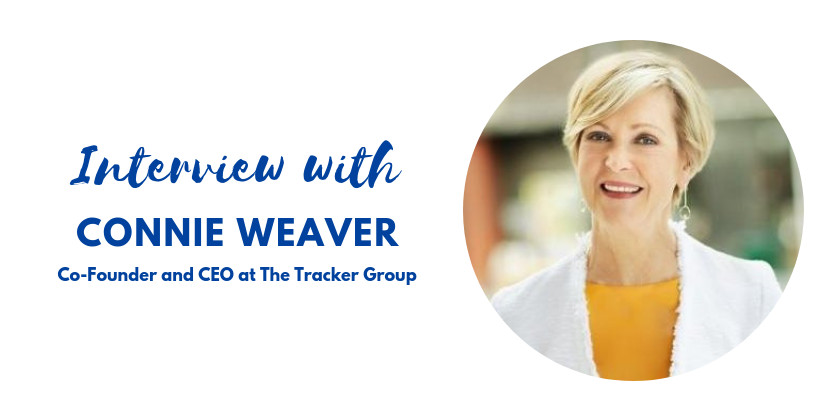
Interview with Connie Weaver, Co-Founder and CEO of The Tracker Group

The Millennium Alliance was honored to have Co-Founder & CEO at The Tracker Group, Connie Weaver join our recent Transformational CMO Assembly in Denver last month. I had a chance to sit down with Connie at the event and discuss her distinguished career in Marketing, her thoughts on what it takes to be a marketing leader in 2018, where the industry is heading, and all things in between. Check out the full interview. 

[youtube https://www.youtube.com/watch?v=0asvC6F_hRk]

How to Combat the Long Lives of Zero-Day Vulnerabilities? Nir Gaist, CTO of Nyotron Has The Answers

Our Transformational CISO Assembly is tomorrow! In the run up to the event, Nir Gaist, Founder and CTO of Nyotron gave Digital Diary an exclusive look into “zero-day vulnerabilities.” Take a look below!


We’ve all heard stories about advanced nation-states leveraging zero days to exploit a previously unknown security vulnerability. Perhaps the most infamous example is Stuxnet (with its four zero days) that survived for an estimated five years prior to being discovered. However, that does not mean the ability to develop exploits for zero-day vulnerabilities is reserved only for well-financed state-sponsored actors.

According to RAND Corporation research, “…any serious attacker can always get an affordable zero-day for almost any target.” Worse, the data suggests that the time between vulnerability discovery to public disclosure and patch availability is almost seven years, a big red flag indicating that companies are dramatically underestimating their exposure.

The term “zero-day vulnerability” is a bit of a misnomer, because it might convey that an attacker tries to quickly get in to victims’ computers, exfiltrate data or launch malware and get out. But just the opposite is the case, as some of the key findings from that RAND report illustrate:

  • Long life: Zero-day exploits and their underlying vulnerabilities have a 6.9 year life expectancy, on average. That’s 2,521 days after the initial discovery. 25 percent of those zero days will survive more than 9.5 years, according to the research.
  • The bad guys work fast: When it comes to the time required to create a working exploit, almost a third are developed in a week or less, with the majority being developed in approximately 22 days from the point an exploitable vulnerability has been found.
  • Bargain price: Although in certain cases for very unique targets and/or environments, the costs may reach millions (i.e., “unicorn exploits”), most zero-day exploits can be purchased for anywhere between $30,000 and $100,000 on the gray or black markets.
  • Walking dead: Declaring a vulnerability as alive or dead can be too simplistic. There are vulnerabilities that are quasi-alive (like zombies) because due to code revisions they got removed from a product without being disclosed, but can still be exploited in older versions. There are also “immortal” vulnerabilities – those that will remain in a product in perpetuity because the vendor no longer maintains the code or issues updates.

A vulnerability’s long life span means that even organizations with industry-leading vulnerability management and patching processes are still exposed. This is true even if you go through the pain of immediately testing and rolling out all critical patches. If you have ever managed patch management tools and projects, you know how difficult it is to consider change control policies, rollback requirements, off-line and remote systems, rollout issues and more. Moreover, we are not talking about just patching Windows operating systems, but all third-party applications in use within an organization, firmware and all operating systems including those powering mobile devices.

The RAND report comes to a grim conclusion: “Defenders will always be vulnerable to zero-day vulnerabilities…” Chances are your organization may already have undetected malware leveraging zero-day vulnerabilities.

The security industry still hasn’t figured out an effective approach to patch management. And then all those pesky fileless attacks that exploit legitimate scripting and administration tools (e.g., PowerShell) have become popular in the last few years. In reality, the majority of commodity malware and opportunistic attacks rely on already known vulnerabilities.

Defending Against Zero Days

It’s simply unrealistic to prevent all zero days from gaining access to your system, but you can stop the damage they try to inflict by building a Defense-in-Depth system that combines the negative and positive security models.

Traditional solutions focus on identifying the “bad” and allows everything else. This model is commonly used in anti-virus, host intrusion prevention system, next-generation antivirus and data loss prevention products, among others. But these solutions struggle to identify fileless and unknown threats. The SANS 2018 Survey on Endpoint Protection and Response survey revealed that while antivirus is the most commonly-used tool for detecting the initial vector of attack, it only managed to detect about 47 prevent of attacks.

However, don’t believe the “AV is dead” hype. It remains an important component of detection and prevention against common threats, but because it cannot protect against today’s most advanced unknown threats, some enterprises are implementing or at least purchasing the next-generation antivirus solutions. Even though the efficacy of Machine Learning-powered NGAV solutions is higher, the fact is that they are still applying negative security models by looking for the “bad” and are trained on known malware samples, thus struggling to identify and block truly unknown, evasive and fileless malware.

If we keep focusing on “badness”, then indeed we’ll always be behind. There will always be another zero day, another new attack vector (e.g., Spectre, Meltdown), another previously unimaginable way for the bad guys to break in. No machine learning model will be able to predict completely new attacks.

What if we turn things on its head and focus on the good instead? Then this constant cat-and-mouse game may actually turn in our favor. “Good” can come in a form of a list of applications (e.g. Whitelisting or Application Control) or in a form of behavior (whether user behavior or the OS behavior).

While the amount of “bad” is infinite (and the number of applications is nearly there as well), the valid and legitimate behavior is finite. From the OS perspective, it is possible to create a map of all legitimate OS behavior, because there are just a handful of operating systems out there, and they change infrequently, especially in the way they operate with the file system and networking.

Of course, no single solution on its own would be sufficient. That’s why defense-in depth has become the gold standard in security. It enables you to build a layered approach to better protect against zero-day exploits, even if attackers are able to bypass one or more layers. True defense-in-depth should not just rely on the “next-gen” version of a well-known technology that is slightly better than the original, but layer different types of protection technologies to create the strongest possible defense.

Nir Giast is the founder and CTO of Nyotron.

ABOUT TRANSFORMATIONAL CISO ASSEMBLYEvent Banner - CISO Miami (1)

In a new digital world, driven by data, businesses of all sizes are working tirelessly to secure their networks, devices, and of course, their data. CISOs need to plan for worst-case scenarios, stay ahead of latest IT Security transformation technology, and maintain their company’s information assets without losing sight of the corporate culture.

This November, the 6th edition of our Transformational CISO Assembly will bring together industry leaders to discuss the latest strategies and innovations in cybersecurity in Miami. Join us today, the assembly is now open for application!

Download your copy of the sponsorship prospectus here for more information>>

How Finance Can Transform Marketing

Marketing and finance are two of the most powerful sectors in a business. With marketing on the creative side attracting and retaining customers to their brand and with finance responsible for the cash flow, the two parts are strategic to the maintenance and development of an organization.

“If you’re interested in business performance you’re interested in marketing effectiveness. My belief is that the expertise and credibility and influence of marketers can be matched also by finance – and the combination can be transformational.” Fran Cassidy, Marketing Consultant.

Between marketing and finance, it is vital that both sectors have a strong effectiveness in their, culture especially language and communication. The relationship between the two sectors can be difficult, even when both teams are inside the same company and working for the same goals. However, the cooperation between these two different parts of the organization is very important to the success of the business.

Marketing costs are constantly changing and usually going up. This next year, it is predicted that marketers will be spending billions to keep up with the latest trends in technology. Even a small business needs a marketing budget for a proper campaign on their product or service, so how can the finance department and the marketing team work together to make sure that money is spent well?

“Marketing people are just as essential to a company as the financial people,” says. The two types, while using different skill sets, can work together as a successful team under the right conditions. This collaboration is something we look for before we fund a new company because it can really make a difference in terms of a business’s financial success.” Douglas Haddad, CEO of Advance Funds Network, a business loan facilitating company.

According to most experts, the only way marketers can really have a productive conversation with finance is by using common language. “If you can’t talk financial literacy you are irrelevant, you’re not influential,” Fran Cassidy advises, “That terminology needs to be agreed within an organization.”

However, the finance sector will also need to understand the language of customer decision-making as well in order to transform marketing. The finance professionals have other super powers that a marketer needs. They think analytically and they think logically. But most importantly they think about strategic business issues like “does this investment make financial sense?” This is why having a strong finance team is needed in order to make marketing budgets work for the advantage of a business.

“To enhance alignment in finance-led organizations, marketing must become more revenue and profitability-focused, operationally efficient and customer experience-centric.”

Good marketers have to think about what makes sense for the business, and the finance team has the DNA to make that work. As financial services begins to invest more into its digital foundation, digital leaders, especially in marketing, are ahead of the pack. By working together, finance has the power to help marketing’s transformation and give their teams the extra boost they need to succeed.

ABOUT THE DIGITAL MARKETING TRANSFORMATION ASSEMBLY

With 53% of Marketers planning on adopting Artificial Intelligence in the next 2 years, Event Banner - CDO7the digital marketing revolution is just getting started. CMOs and CDOs alike are seeking new ways to maximize their digital reach to attract new business to, as well as deliver enrich, personalized experiences to existing customers.


The Digital Marketing Transformation Assembly will bring together North America’s most prominent digital marketing technology and business leaders from all major consumer-driven industries to discuss the latest technology, innovations, and strategies driving digital marketing in 2019 and beyond.

Are you a CMO interested in attending this event? Enquire here today to find out if you qualify for Millennium Membership >>

Download the Sponsorship Prospectus to see if your eligible to sponsor our event >>